pangkami
from an exclusive perspective
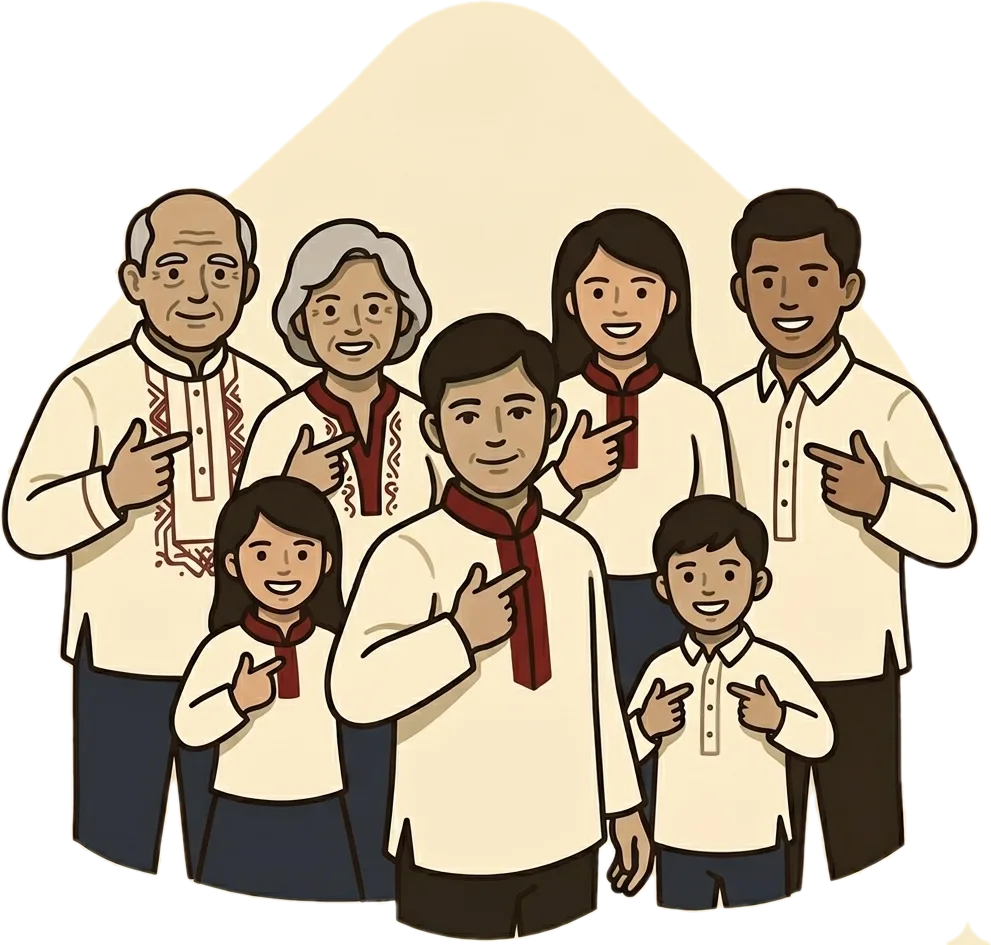
From root: kami
Usage Note
Pangkami refers to an 'exclusive we' perspective, often used in academic contexts like Filipino historiography. It describes communication intended for one's own group about themselves.
Examples
" Pangkami ang usapan. "
Natural Translation
The conversation is from our own perspective.
Literal Translation
For-exclusive-perspective the conversation.
" Ang kwento na ito ay pangkami talaga. "
Natural Translation
This story is really from our own exclusive perspective.
Literal Translation
The story that this is for-exclusive-perspective really.
" Mas malalim na maunawaan ang aming kasaysayan kung isusulat ito sa pangkami at hindi sa pananaw ng iba. "
Natural Translation
Our history is understood more deeply when it is written from our own exclusive perspective and not from the viewpoint of others.
Literal Translation
More deep to-understand the our history if to-be-written it in exclusive-perspective and not in viewpoint of others.
Take Tagalog with you
The full course, a 12,500-word dictionary, and flashcards that make every word stick — free to start on iOS and Android.




Tagalog builds thousands of words from a few hundred roots.
How Tagalog words workWord family
kami has 1 related form built from the same root.
Related Words
Explore Tagalog by topic
Free guides on grammar, vocabulary, and culture to take you past single-word lookups.
Philippine Christmas Traditions: World's Longest Holiday
Philippine Christmas traditions run four months — from Ber-month carols to Simbang Gabi dawn masses, Noche Buena feasts, and parol lanterns lighting every street.
Tagalog vs Filipino: What's the Difference & Which to Learn
Tagalog and Filipino aren't the same language — but they overlap almost completely. Here's the real difference and which one you should actually learn.

Na vs -ng in Tagalog: The Linker Rule Made Simple
When do you use na vs -ng in Tagalog? One simple rule, with clear examples, memory tips, and common mistakes explained for English-speaking beginners.

Tagalog Greetings: How to Say Hello, Goodbye & Po/Opo
Master Tagalog greetings with pronunciation: kumusta, magandang umaga, po and opo polite forms, time-of-day phrases, and the mano po tradition.