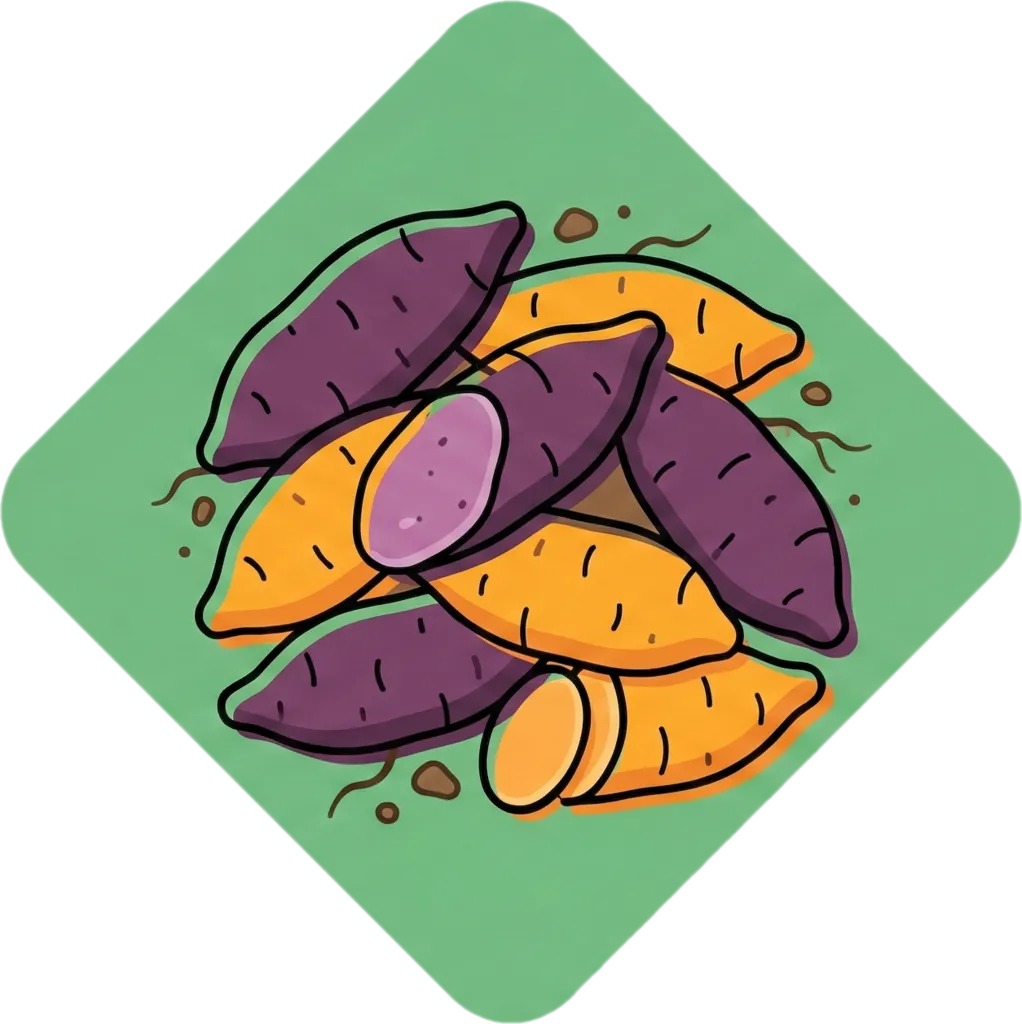
From root: kamote
Conjugations
Past (Completed)
nagkamote
nag-ka-MO-te
planted sweet potatoes
Present (Incomplete)
nagkakamote
nag-ka-ka-MO-te
planting sweet potatoes
Future (Contemplated)
magkakamote
mag-ka-ka-MO-te
will plant sweet potatoes
Usage Note
Magkamote is used primarily in agricultural contexts to describe the act of planting sweet potatoes. In casual conversation, learners should be aware that the root 'kamote' often carries a slang connotation of failure or performing poorly.
Examples
" Nagplano kaming magkamote. "
Natural Translation
We planned to plant sweet potatoes.
Literal Translation
Planned we to-plant-sweet-potatoes.
" Nagplano kaming magkamote sa bakanteng lote. "
Natural Translation
We planned to plant sweet potatoes in the vacant lot.
Literal Translation
Planned we to-plant-sweet-potatoes in vacant lot.
" Nang maubos ang aming palay, nagpasya ang lolo kong magkamote upang may makain pa rin kami sa panahon ng tagtuyot. "
Natural Translation
When our rice ran out, my grandfather decided to plant sweet potatoes so that we would still have something to eat during the drought.
Literal Translation
When ran-out the our rice, decided the grandfather my to-plant-sweet-potatoes in-order have something-to-eat still also we in time of drought.
Take Tagalog with you
The full course, a 12,500-word dictionary, and flashcards that make every word stick — free to start on iOS and Android.




Tagalog builds thousands of words from a few hundred roots.
How Tagalog words workWord family
kamote has 6 related forms built from the same root.
Related Words
Explore Tagalog by topic
Free guides on grammar, vocabulary, and culture to take you past single-word lookups.

Tagalog Numbers 1-100: Counting, Time & Money Explained
Learn Tagalog numbers 1-100 and beyond. Master both native and Spanish-derived counting systems, plus telling time, reading prices, and ordinals.

Tagalog vs Filipino: What's the Difference & Which to Learn
Tagalog and Filipino aren't the same language — but they overlap almost completely. Here's the real difference and which one you should actually learn.

Ang, Ng, Sa: The 3 Tagalog Case Markers Explained
Ang, ng, sa are the three Tagalog case markers every noun takes. Learn what each does, the personal forms si/ni/kay, plurals with mga, and clear examples.

Tagalog Root Words: Learn a Few Hundred, Understand Thousands
Tagalog root words unlock vocabulary fast: learn a few hundred and recognize thousands. Real word families, examples, and a practical study strategy.