karaniwan
karaniwán with stress marks
ordinary, common
Usage Note
Karaniwan means typical, usual, or ordinary, and is one of the most frequently used descriptors in Tagalog, applicable to people, events, and things alike. Depending on tone it can be neutral or carry a slightly dismissive shade.
Examples
" Karaniwan lang ang araw ko. "
Natural Translation
My day was just ordinary.
Literal Translation
Ordinary just the day my.
" Karaniwan lang ang buhay namin sa probinsya pero masaya kami. "
Natural Translation
Our life in the province is ordinary but we are happy.
Literal Translation
Ordinary just the life our in-the province but happy we.
" Karaniwan nang umuulan tuwing Hunyo kaya laging may dalang payong ang mga tao sa kalye. "
Natural Translation
It usually rains in June, so people on the street always carry an umbrella.
Literal Translation
Common already rains every-time June so always has carrying umbrella the (plural) person in street.
Take Tagalog with you
The full course, a 12,500-word dictionary, and flashcards that make every word stick — free to start on iOS and Android.




Tagalog builds thousands of words from a few hundred roots.
How Tagalog words workRelated Words
Explore Tagalog by topic
Free guides on grammar, vocabulary, and culture to take you past single-word lookups.

Tagalog Pronouns Explained: Complete Chart with Examples
Every Tagalog pronoun explained with clear charts: ang/ng/sa forms, tayo vs kami, ikaw vs ka, politeness markers, and the mistakes beginners make.
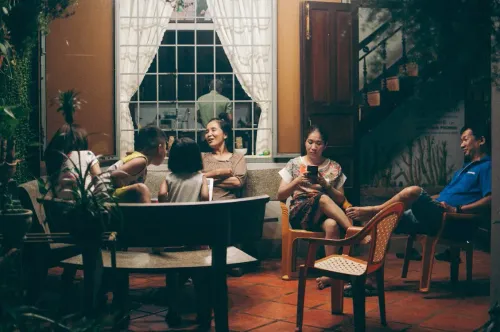
Filipino Family Words and Honorifics: Ate, Kuya & Tita
Filipino family words like ate, kuya, tita, tito, lolo, and lola go far beyond family — learn how Filipinos use them with strangers, plus mano po etiquette.

Tagalog Slang Guide: 20 Words You'll Hear on TikTok
Tagalog slang explained: lodi, petmalu, werpa, astig, chika and more. Decode Filipino TikTok comments, group chats, and pop culture with this practical guide.

Tagalog Greetings: How to Say Hello, Goodbye & Po/Opo
Master Tagalog greetings with pronunciation: kumusta, magandang umaga, po and opo polite forms, time-of-day phrases, and the mano po tradition.