kargador
kargadór with stress marks
stevedore
Usage Note
Kargador is a Spanish loanword for a dock worker or porter who loads and unloads cargo, and by extension any manual laborer who carries heavy loads. It reflects the Spanish colonial legacy embedded in Philippine labor terminology.
Examples
" Masipag ang kargador sa pantalan. "
Natural Translation
The stevedore at the dock is hardworking.
Literal Translation
Hardworking the stevedore at-the dock.
" Matipuno ang mga kargador sa pantalan dahil sa mabigat na trabaho. "
Natural Translation
The stevedores at the dock are muscular because of the heavy work.
Literal Translation
Muscular the stevedores at-the dock because-of the heavy work.
" Buong araw na nagtrabaho ang mga kargador sa init ng araw upang maihakot ang lahat ng kahon bago dumating ang malakas na bagyo. "
Natural Translation
The stevedores worked all day in the heat of the sun to haul all the boxes before the strong storm arrived.
Literal Translation
Whole day worked the stevedores in-the heat of-the sun so-that be-hauled the all of box before arrive the strong storm.
Take Tagalog with you
The full course, a 12,500-word dictionary, and flashcards that make every word stick — free to start on iOS and Android.




Tagalog builds thousands of words from a few hundred roots.
How Tagalog words workRelated Words
Explore Tagalog by topic
Free guides on grammar, vocabulary, and culture to take you past single-word lookups.

Tagalog Affixes Explained: A Beginner's Guide to Word Building
Tagalog affixes turn one root word into dozens of meanings. Learn prefixes, infixes, suffixes, and circumfixes with clear examples for beginners.

Tagalog Question Words: Ano, Sino, Saan & More
Tagalog question words like ano, sino, and saan need the right frame to work. Learn the ang-vs-pronoun rule, confusable pairs, and the ba particle with audio.
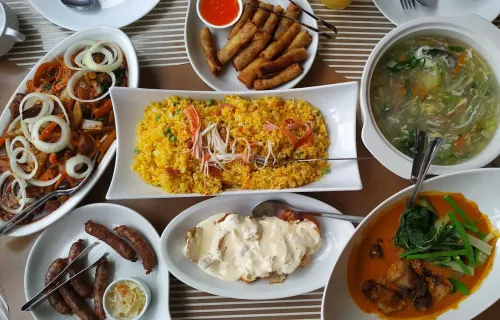
Filipino Food: 12 Essential Dishes (With Tagalog Names)
Filipino food, from adobo to halo-halo: learn the Tagalog names, pronunciations, and ingredients behind 12 dishes you'll want to try on your first trip.
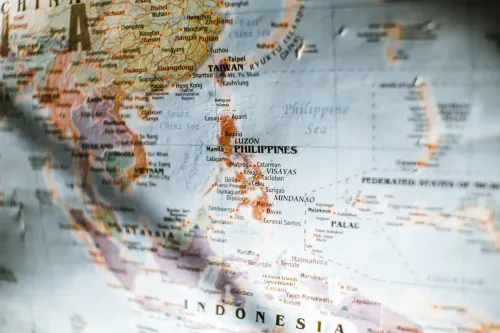
Philippines Geography for Learners: Islands & Language
Philippines geography for Tagalog learners: 7,641 islands, three island groups, and the Southern Luzon heartland where the Tagalog language was born.