
From root: karne
Conjugations
Past (Completed)
kinarne
ki-nar-NE
processed into meat
Present (Incomplete)
kinakarne
ki-na-kar-NE
processing into meat
Future (Contemplated)
kakarnehin
ka-kar-ne-HIN
will process into meat
Usage Note
Karnehin is used to describe the process of slaughtering and butchering an animal specifically to be prepared as meat for food. It is most commonly used in rural or market contexts when referring to livestock like pigs, cows, or chickens.
Examples
" Karnehin natin ang baboy. "
Natural Translation
Let's process the pig into meat.
Literal Translation
Process-into-meat we the pig.
" Gusto kong karnehin ito. "
Natural Translation
I want to process this into meat.
Literal Translation
Want by-me to-meat this.
" Kapag dumating na ang Pasko, karnehin natin ang baboy na inalagaan namin buong taon. "
Natural Translation
When Christmas comes, let's butcher the pig that we raised the whole year.
Literal Translation
When arrives already the Christmas, process-into-meat we the pig that was-raised by-us whole year.
Take Tagalog with you
The full course, a 12,500-word dictionary, and flashcards that make every word stick — free to start on iOS and Android.




Tagalog builds thousands of words from a few hundred roots.
How Tagalog words workWord family
karne has 5 related forms built from the same root.
Related Words
Explore Tagalog by topic
Free guides on grammar, vocabulary, and culture to take you past single-word lookups.
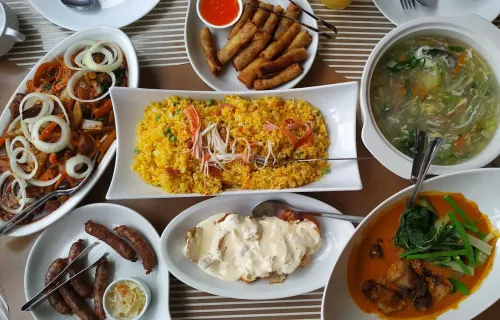
Filipino Food: 12 Essential Dishes (With Tagalog Names)
Filipino food, from adobo to halo-halo: learn the Tagalog names, pronunciations, and ingredients behind 12 dishes you'll want to try on your first trip.

Magkano: How to Ask "How Much" in Tagalog
Magkano means how much in Tagalog. Learn to ask a price, tell it apart from ilan and gaano, sound polite with po, and haggle at the palengke.

Tagalog Affixes Explained: A Beginner's Guide to Word Building
Tagalog affixes turn one root word into dozens of meanings. Learn prefixes, infixes, suffixes, and circumfixes with clear examples for beginners.
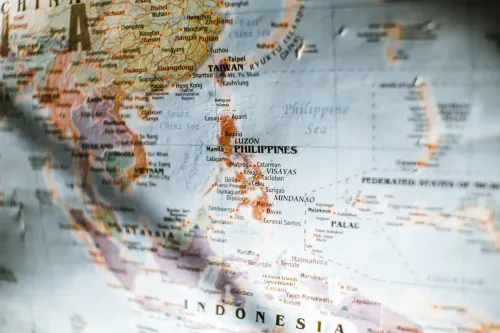
Philippines Geography for Learners: Islands & Language
Philippines geography for Tagalog learners: 7,641 islands, three island groups, and the Southern Luzon heartland where the Tagalog language was born.