Also means
Kasi is also an extremely common informal conjunction meaning 'because', used constantly in everyday speech.
Usage Note
Kasi in its literary or poetic sense refers to grace, affection, or a beloved person — a meaning preserved in formal and older Tagalog texts. In modern daily speech this meaning is largely archaic; Filipinos almost universally use kasi as an informal word for 'because,' making it one of the most frequent words in spoken Tagalog.
Examples
" Ikaw ang kasi ng puso ko. "
Natural Translation
You are the beloved of my heart.
Literal Translation
You the beloved of heart my.
" Salamat sa kasi ng langit. "
Natural Translation
Thank you for the grace of heaven.
Literal Translation
Thanks to-the grace of heaven.
" Sa mga lumang awiting-bayan, madalas tawaging kasi ang minamahal upang ipahayag ang lalim ng pagmamahal na hindi kayang sabihin nang tuwiran. "
Natural Translation
In old folk songs, the beloved is often called 'kasi' to express the depth of love that cannot be said directly.
Literal Translation
In the old folk-songs, often called beloved the loved-one to express the depth of love that cannot say directly.
Take Tagalog with you
The full course, a 12,500-word dictionary, and flashcards that make every word stick — free to start on iOS and Android.




Tagalog builds thousands of words from a few hundred roots.
How Tagalog words workRelated Words
Explore Tagalog by topic
Free guides on grammar, vocabulary, and culture to take you past single-word lookups.

Magkano: How to Ask "How Much" in Tagalog
Magkano means how much in Tagalog. Learn to ask a price, tell it apart from ilan and gaano, sound polite with po, and haggle at the palengke.

Tagalog Verb Conjugation: Aspects Made Simple
Tagalog verb conjugation uses aspects, not tenses. Learn the three aspects with -um- and mag- verbs, one reduplication rule, and clear example tables.

Na vs -ng in Tagalog: The Linker Rule Made Simple
When do you use na vs -ng in Tagalog? One simple rule, with clear examples, memory tips, and common mistakes explained for English-speaking beginners.
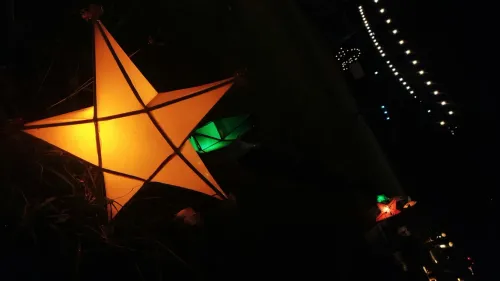
Philippine Christmas Traditions: World's Longest Holiday
Philippine Christmas traditions run four months — from Ber-month carols to Simbang Gabi dawn masses, Noche Buena feasts, and parol lanterns lighting every street.