
From root: keso
Conjugations
Past (Completed)
kineso
ki-NE-so
added cheese to something
Present (Incomplete)
kinekeso
ki-ne-KE-so
adding cheese to something
Future (Contemplated)
kekesuhin
ke-ke-su-HIN
will add cheese to something
Usage Note
Kesuhin is used when instructing someone to add cheese to a specific food item or to top a dish with cheese. It is a more direct, object-focused alternative to the common phrase "lagyan ng keso" during food preparation.
Examples
" Kesuhin mo ang tinapay. "
Natural Translation
Add cheese to the bread.
Literal Translation
Add-cheese-to by-you the bread.
" Gusto kong kesuhin ang macaroni. "
Natural Translation
I want to add cheese to the macaroni.
Literal Translation
Want I add-cheese-to the macaroni.
" Bago ihain ang pasta, kesuhin mo muna nang husto upang lalo pang sumarap ito sa panlasa ng mga bata. "
Natural Translation
Before serving the pasta, add plenty of cheese first so it tastes even better to the children's palate.
Literal Translation
Before serve the pasta, add-cheese-to by-you first thoroughly so even more becomes-tasty it to taste of-the children.
Take Tagalog with you
The full course, a 12,500-word dictionary, and flashcards that make every word stick — free to start on iOS and Android.




Tagalog builds thousands of words from a few hundred roots.
How Tagalog words workWord family
keso has 5 related forms built from the same root.
Related Words
Explore Tagalog by topic
Free guides on grammar, vocabulary, and culture to take you past single-word lookups.

Tagalog Verb Focus System Explained (It's Not Active vs. Passive)
The Tagalog verb focus system isn't active vs. passive. Learn actor focus, object focus, and more with clear examples that finally make it click.
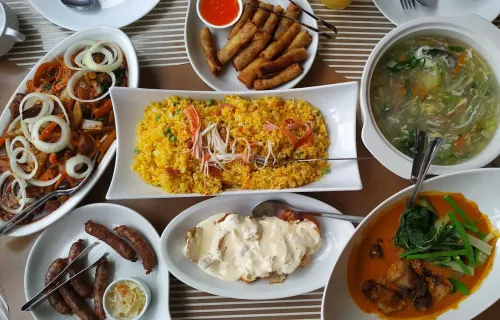
Filipino Food: 12 Essential Dishes (With Tagalog Names)
Filipino food, from adobo to halo-halo: learn the Tagalog names, pronunciations, and ingredients behind 12 dishes you'll want to try on your first trip.

Tagalog Root Words: Learn a Few Hundred, Understand Thousands
Tagalog root words unlock vocabulary fast: learn a few hundred and recognize thousands. Real word families, examples, and a practical study strategy.

Philippines Geography for Learners: Islands & Language
Philippines geography for Tagalog learners: 7,641 islands, three island groups, and the Southern Luzon heartland where the Tagalog language was born.