kinis
kinís with stress marks
smoothness
Usage Note
Kinis refers to smoothness or luster, most commonly used in its adjective form, "makinis," to describe a clear complexion or a polished surface. It is a culturally significant term in the Philippines, frequently appearing in skincare conversations and when praising the quality of craftsmanship in wood or metal.
Examples
" Makinis ang mukha mo. "
Natural Translation
Your face is smooth.
Literal Translation
Smooth the face your.
" Gustong-gusto ko ang kinis ng balat niya. "
Natural Translation
I really like how smooth her skin is.
Literal Translation
Want-very-much I the smoothness of skin his/her.
" Kahit mahal ang produkto, sulit naman dahil pinaganda nito ang kinis ng aking balat sa loob ng isang buwan. "
Natural Translation
Even though the product is expensive, it was worth it because it improved the smoothness of my skin within a month.
Literal Translation
Even-if expensive the product, worth-it though because made-beautiful it the smoothness of my skin within of one month.
Take Tagalog with you
The full course, a 12,500-word dictionary, and flashcards that make every word stick — free to start on iOS and Android.




Tagalog builds thousands of words from a few hundred roots.
How Tagalog words workActor Focus Verbs
Object Focus Verbs
Related Words
Explore Tagalog by topic
Free guides on grammar, vocabulary, and culture to take you past single-word lookups.

Tagalog Root Words: Learn a Few Hundred, Understand Thousands
Tagalog root words unlock vocabulary fast: learn a few hundred and recognize thousands. Real word families, examples, and a practical study strategy.
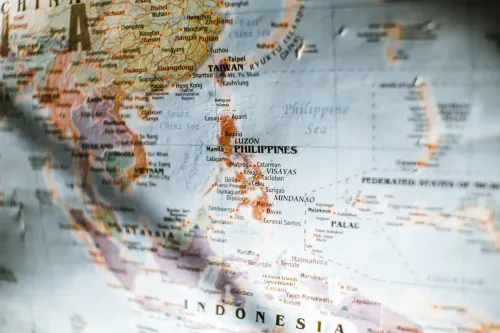
Philippines Geography for Learners: Islands & Language
Philippines geography for Tagalog learners: 7,641 islands, three island groups, and the Southern Luzon heartland where the Tagalog language was born.

Philippine Christmas Traditions: World's Longest Holiday
Philippine Christmas traditions run four months — from Ber-month carols to Simbang Gabi dawn masses, Noche Buena feasts, and parol lanterns lighting every street.

Tagalog Time Expressions: Past, Present & Future Guide
Tagalog has no tenses — it uses aspect. Learn time words, days of the week, clock time, and the aspect system, with vocabulary tables and cultural notes.