komunidad
komunidád with stress marks
community
Usage Note
Komunidad is a Spanish loanword (from comunidad) used broadly to refer to a neighborhood, village, or social group. Filipino culture places strong value on community solidarity through bayanihan, making komunidad a frequently used and culturally significant word in civic discourse and barangay governance.
Examples
" Mababait ang mga tao sa komunidad namin. "
Natural Translation
The people in our community are kind.
Literal Translation
Kind the plural people in community ours.
" Nagtulungan ang buong komunidad para linisin ang ilog. "
Natural Translation
The whole community worked together to clean the river.
Literal Translation
Helped-together the whole community to clean the river.
" Mahalaga ang papel ng bawat pamilya sa komunidad upang manatiling ligtas at maayos ang aming lugar. "
Natural Translation
Each family's role in the community is important so that our place stays safe and orderly.
Literal Translation
Important the role of each family in community so-that staying safe and orderly the our place.
Take Tagalog with you
The full course, a 12,500-word dictionary, and flashcards that make every word stick — free to start on iOS and Android.




Tagalog builds thousands of words from a few hundred roots.
How Tagalog words workRelated Words
- AWOL absence without leave
- Amboy short for American boy
- Ati ethnolinguistic group in Panay
- Balbalan ethnolinguistic group (Kalinga)
- Hiligaynon ethnolinguistic group/language
- Ilokana female native of the Ilocos region; Ilokana woman
- Ilokano Ethnolinguistic group in Ilocos
- Ilonggo Language/People of Western Visayas
Explore Tagalog by topic
Free guides on grammar, vocabulary, and culture to take you past single-word lookups.

Tagalog vs Filipino: What's the Difference & Which to Learn
Tagalog and Filipino aren't the same language — but they overlap almost completely. Here's the real difference and which one you should actually learn.
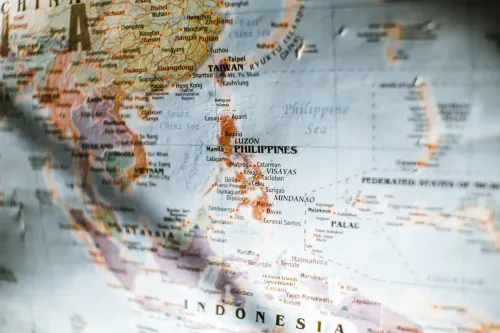
Philippines Geography for Learners: Islands & Language
Philippines geography for Tagalog learners: 7,641 islands, three island groups, and the Southern Luzon heartland where the Tagalog language was born.

Tagalog Pronouns Explained: Complete Chart with Examples
Every Tagalog pronoun explained with clear charts: ang/ng/sa forms, tayo vs kami, ikaw vs ka, politeness markers, and the mistakes beginners make.

Is Tagalog Hard to Learn? An Honest Answer
Tagalog takes around 1,100 hours to reach professional proficiency. Here is what is easy, what is hard, and what to expect at 3, 6, and 12 months.