kumbensiyon
kumbensiyón with stress marks
convention
Usage Note
Kumbensiyon is from Spanish convención and is used for both a large formal meeting or conference and for a social norm or convention. In the Philippine context it appears regularly in political and organizational news — party conventions, international treaty conventions, and community assemblies.
Examples
" May kumbensiyon bukas. "
Natural Translation
There's a convention tomorrow.
Literal Translation
Has convention tomorrow.
" Dadalo siya sa kumbensiyon ng mga guro sa Maynila. "
Natural Translation
He/She will attend the teachers' convention in Manila.
Literal Translation
Will-attend he/she at-the convention of-the teachers in Manila.
" Sa darating na kumbensiyon ng partido, pipiliin nila ang kandidatong tatakbo sa pagkapangulo sa susunod na halalan. "
Natural Translation
At the upcoming party convention, they will choose the candidate who will run for president in the next election.
Literal Translation
At coming convention of party, will-choose they the candidate that will-run for presidency in next election.
Take Tagalog with you
The full course, a 12,500-word dictionary, and flashcards that make every word stick — free to start on iOS and Android.




Tagalog builds thousands of words from a few hundred roots.
How Tagalog words workRelated Words
- AWOL absence without leave
- Amboy short for American boy
- Ati ethnolinguistic group in Panay
- Balbalan ethnolinguistic group (Kalinga)
- Hiligaynon ethnolinguistic group/language
- Ilokana female native of the Ilocos region; Ilokana woman
- Ilokano Ethnolinguistic group in Ilocos
- Ilonggo Language/People of Western Visayas
Explore Tagalog by topic
Free guides on grammar, vocabulary, and culture to take you past single-word lookups.

Tagalog vs Filipino: What's the Difference & Which to Learn
Tagalog and Filipino aren't the same language — but they overlap almost completely. Here's the real difference and which one you should actually learn.
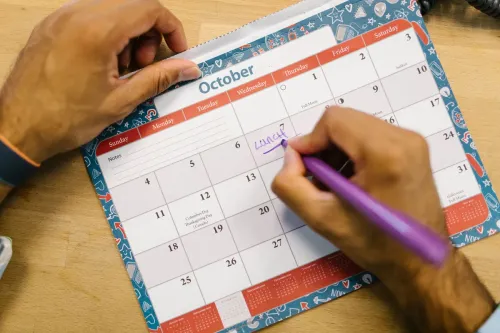
Days of the Week and Months in Tagalog
The days of the week and months in Tagalog are Spanish loanwords. Learn all 7 days and 12 months with pronunciation, plus how to say dates and 'every Monday.'

Tagalog Time Expressions: Past, Present & Future Guide
Tagalog has no tenses — it uses aspect. Learn time words, days of the week, clock time, and the aspect system, with vocabulary tables and cultural notes.

Ang, Ng, Sa: The 3 Tagalog Case Markers Explained
Ang, ng, sa are the three Tagalog case markers every noun takes. Learn what each does, the personal forms si/ni/kay, plurals with mga, and clear examples.