ipagkumpisal
ipagkumpísal with stress marks
to confess [it]
From root: kumpisal
Conjugations
Past (Completed)
ipinagkumpisal
i-pi-nag-kum-PI-sal
confessed
Present (Incomplete)
ipinagkukumpisal
i-pi-nag-ku-kum-PI-sal
is being confessed
Future (Contemplated)
ipagkukumpisal
i-pag-ku-kum-PI-sal
will be confessed
Usage Note
Ipagkumpisal is the object-focus ipag- form of kumpisal, used when the sin, wrongdoing, or matter being confessed is the focus of the sentence. Deeply rooted in Philippine Catholic practice, it is the natural verb when the content of the confession — rather than the act of confessing — is what matters; the actor-focus partner magkumpisal foregrounds the confessor instead.
Examples
" Gusto niyang ipagkumpisal ang kasalanan. "
Natural Translation
He wants to confess the sin.
Literal Translation
Want he to-confess the sin.
" Handa ang lalaki na ipagkumpisal ang kanyang lihim sa kaibigan. "
Natural Translation
The man is ready to confess his secret to a friend.
Literal Translation
Ready the man to confess the his secret to friend.
" Matagal niyang itinago ang pagkakamali, pero sa wakas ay handa na niyang ipagkumpisal ito sa pari. "
Natural Translation
He hid the mistake for a long time, but at last he is finally ready to confess it to the priest.
Literal Translation
Long he hid the mistake, but at last ready already he to-confess it to priest.
Take Tagalog with you
The full course, a 12,500-word dictionary, and flashcards that make every word stick — free to start on iOS and Android.




Tagalog builds thousands of words from a few hundred roots.
How Tagalog words workWord family
kumpisal has 1 related form built from the same root.
Related Words
Explore Tagalog by topic
Free guides on grammar, vocabulary, and culture to take you past single-word lookups.

Ng vs Nang in Tagalog: The Spelling Rule
Ng vs nang sound identical but spell differently. Use ng to mark nouns (of, the object), and nang for how, when, repetition, and counting time.

Philippine Christmas Traditions: World's Longest Holiday
Philippine Christmas traditions run four months — from Ber-month carols to Simbang Gabi dawn masses, Noche Buena feasts, and parol lanterns lighting every street.
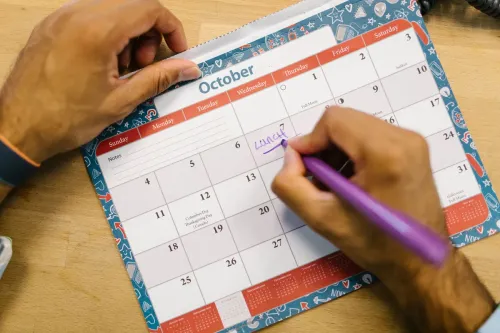
Days of the Week and Months in Tagalog
The days of the week and months in Tagalog are Spanish loanwords. Learn all 7 days and 12 months with pronunciation, plus how to say dates and 'every Monday.'

Tagalog Greetings: How to Say Hello, Goodbye & Po/Opo
Master Tagalog greetings with pronunciation: kumusta, magandang umaga, po and opo polite forms, time-of-day phrases, and the mano po tradition.