magkumpisal
magkumpísal with stress marks
to confess
From root: kumpisal
Conjugations
Past (Completed)
nagkumpisal
nag-kum-PI-sal
confessed
Present (Incomplete)
nagkukumpisal
nag-ku-kum-PI-sal
is confessing
Future (Contemplated)
magkukumpisal
mag-ku-kum-PI-sal
will confess
Usage Note
Magkumpisal is the actor-focus mag- form of kumpisal, a Spanish loanword from confesar, primarily used for the Catholic sacrament of confession — one of the most culturally embedded religious practices in the Philippines. It is also used more loosely for admitting wrongdoing in everyday speech, and the object-focus partner is ipagkumpisal.
Examples
" Pumunta siya para magkumpisal. "
Natural Translation
She went to confess.
Literal Translation
Went she for to-confess.
" Gusto ng lalaki na magkumpisal sa pari bukas. "
Natural Translation
The man wants to confess to the priest tomorrow.
Literal Translation
Want of man to confess to priest tomorrow.
" Bago siya tuluyang magbago ng buhay, nagpasya siyang magkumpisal sa pari at humingi ng tawad sa mga taong nasaktan niya. "
Natural Translation
Before she fully changed her life, she decided to confess to the priest and ask forgiveness from the people she had hurt.
Literal Translation
Before she completely to-change of life, decided she to-confess to priest and to-ask of forgiveness from the people hurt she.
Take Tagalog with you
The full course, a 12,500-word dictionary, and flashcards that make every word stick — free to start on iOS and Android.




Tagalog builds thousands of words from a few hundred roots.
How Tagalog words workWord family
kumpisal has 1 related form built from the same root.
Related Words
Explore Tagalog by topic
Free guides on grammar, vocabulary, and culture to take you past single-word lookups.

Na vs -ng in Tagalog: The Linker Rule Made Simple
When do you use na vs -ng in Tagalog? One simple rule, with clear examples, memory tips, and common mistakes explained for English-speaking beginners.
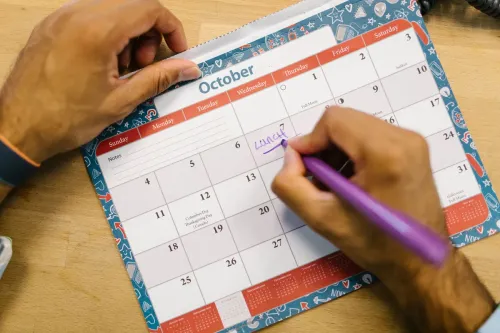
Days of the Week and Months in Tagalog
The days of the week and months in Tagalog are Spanish loanwords. Learn all 7 days and 12 months with pronunciation, plus how to say dates and 'every Monday.'

Mano Po and Filipino Etiquette: A Visitor's Guide
Mano po presses an elder's hand to your forehead as a blessing. Learn who to mano, how to lip-point, and the etiquette that wins over a Filipino family.

Tagalog vs Filipino: What's the Difference & Which to Learn
Tagalog and Filipino aren't the same language — but they overlap almost completely. Here's the real difference and which one you should actually learn.