pagkalalaki
manhood; masculinity
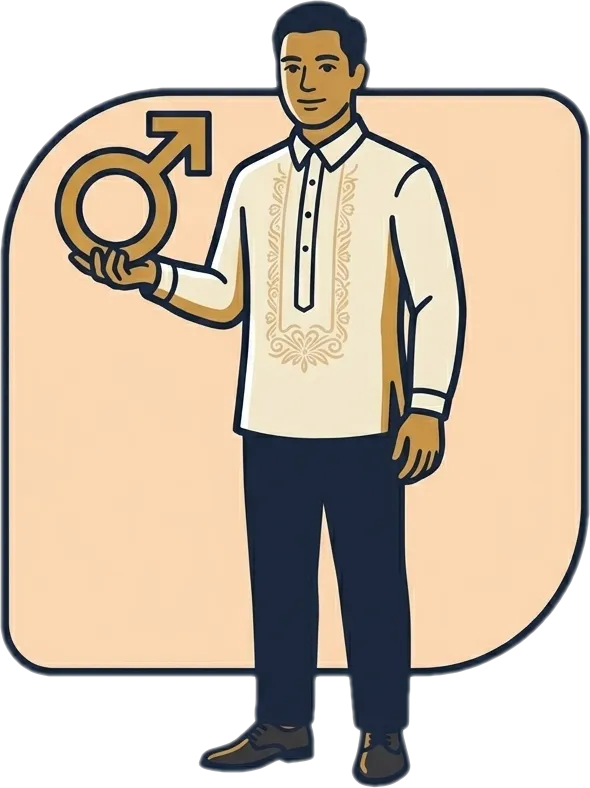
From root: lalaki
Usage Note
Pagkalalaki refers to the state, identity, or character of being a man. It is often used when discussing male dignity or ego.
Examples
" May pagkalalaki siya. "
Natural Translation
He has a manly air.
Literal Translation
Has manliness he.
" Pinahahalagahan niya ang kanyang pagkalalaki. "
Natural Translation
He values his manhood.
Literal Translation
He values his manhood.
" Para sa kanya, hindi nasusukat ang pagkalalaki sa lakas kundi sa kung paano niya inaalagaan ang pamilya. "
Natural Translation
For him, manhood isn't measured by strength but by how he takes care of his family.
Literal Translation
For to him, not is-measured the manhood in strength but in how he takes-care-of the family.
Take Tagalog with you
The full course, a 12,500-word dictionary, and flashcards that make every word stick — free to start on iOS and Android.




Tagalog builds thousands of words from a few hundred roots.
How Tagalog words workWord family
lalaki has 5 related forms built from the same root.
Related Words
Explore Tagalog by topic
Free guides on grammar, vocabulary, and culture to take you past single-word lookups.

Seasons in the Philippines: A Tagalog Guide
The Philippines has two seasons, not four. Learn tag-araw, tag-ulan, and taglamig, the generative tag- prefix, and the weather vocabulary to match.

Ang, Ng, Sa: The 3 Tagalog Case Markers Explained
Ang, ng, sa are the three Tagalog case markers every noun takes. Learn what each does, the personal forms si/ni/kay, plurals with mga, and clear examples.

Mano Po and Filipino Etiquette: A Visitor's Guide
Mano po presses an elder's hand to your forehead as a blessing. Learn who to mano, how to lip-point, and the etiquette that wins over a Filipino family.
Days of the Week and Months in Tagalog
The days of the week and months in Tagalog are Spanish loanwords. Learn all 7 days and 12 months with pronunciation, plus how to say dates and 'every Monday.'