lalaki
laláki with stress marks
man; male
Usage Note
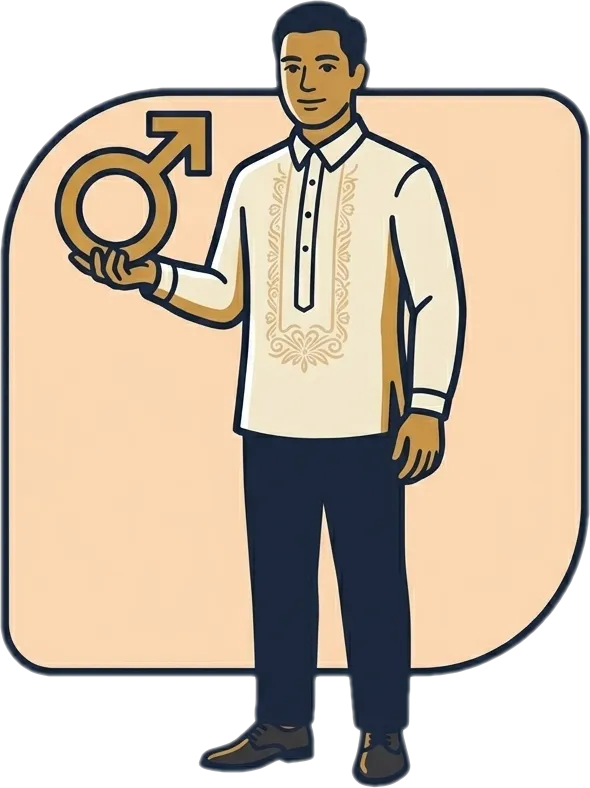
Lalaki refers to a man or any male person or animal. In daily conversation, it is frequently used with a linker to specify gender, such as in 'batang lalaki' (boy) or 'pusang lalaki' (male cat).
Examples
" Matangkad ang lalaki. "
Natural Translation
The man is tall.
Literal Translation
Tall the man.
" Ang lalaki ay naglalakad. "
Natural Translation
The man is walking.
Literal Translation
The man is walking.
" Ang lalaking nakatayo sa tabi ng pintuan ang siyang tumulong sa amin nang masira ang aming sasakyan. "
Natural Translation
The man standing beside the door is the one who helped us when our car broke down.
Literal Translation
The man standing at side of door the one helped to-us when broke the our vehicle.
Take Tagalog with you
The full course, a 12,500-word dictionary, and flashcards that make every word stick — free to start on iOS and Android.




Tagalog builds thousands of words from a few hundred roots.
How Tagalog words workDerived Words
Actor Focus Verbs
Related Words
- AWOL absence without leave
- Amboy short for American boy
- Ati ethnolinguistic group in Panay
- Balbalan ethnolinguistic group (Kalinga)
- Hiligaynon ethnolinguistic group/language
- Ilokana female native of the Ilocos region; Ilokana woman
- Ilokano Ethnolinguistic group in Ilocos
- Ilonggo Language/People of Western Visayas
Explore Tagalog by topic
Free guides on grammar, vocabulary, and culture to take you past single-word lookups.

Ang, Ng, Sa: The 3 Tagalog Case Markers Explained
Ang, ng, sa are the three Tagalog case markers every noun takes. Learn what each does, the personal forms si/ni/kay, plurals with mga, and clear examples.

Magkano: How to Ask "How Much" in Tagalog
Magkano means how much in Tagalog. Learn to ask a price, tell it apart from ilan and gaano, sound polite with po, and haggle at the palengke.
How to Say "I Love You" in Tagalog: Phrases & Meaning
Learn how to say I love you in Tagalog. Mahal kita, Iniibig kita, and Filipino terms of endearment for partners, family, and friends — with cultural notes.

Philippine Christmas Traditions: World's Longest Holiday
Philippine Christmas traditions run four months — from Ber-month carols to Simbang Gabi dawn masses, Noche Buena feasts, and parol lanterns lighting every street.