From root: lampaso
Conjugations
Past (Completed)
nilampasuhan
ni-lam-pa-su-HAN
mopped a place
Present (Incomplete)
nilalampasuhan
ni-la-lam-pa-su-HAN
mopping a place
Future (Contemplated)
lalampasuhan
la-lam-pa-su-HAN
will mop a place
Usage Note
Lampasuhan is an object-focus verb used when specifying the area or floor that needs to be cleaned, traditionally using a coconut husk or a mop. It is commonly used in domestic settings when assigning household cleaning tasks.
Examples
" Lampasuhan mo ang sahig. "
Natural Translation
Mop the floor.
Literal Translation
Mop-at you the floor.
" Masarap lampasuhan ang malinis na sahig. "
Natural Translation
It is nice to mop a the clean floor.
Literal Translation
Nice mop-at the clean floor.
" Pagkatapos ng handaan, kinailangan naming lampasuhan ang buong sahig dahil punong-puno ito ng pagkain at inumin. "
Natural Translation
After the party, we had to mop the entire floor because it was covered with food and drinks.
Literal Translation
After of the party, needed we mop-at the whole floor because very-full it of food and drink.
Take Tagalog with you
The full course, a 12,500-word dictionary, and flashcards that make every word stick — free to start on iOS and Android.




Tagalog builds thousands of words from a few hundred roots.
How Tagalog words workWord family
lampaso has 7 related forms built from the same root.
Related Words
Explore Tagalog by topic
Free guides on grammar, vocabulary, and culture to take you past single-word lookups.

Tagalog Verb Conjugation: Aspects Made Simple
Tagalog verb conjugation uses aspects, not tenses. Learn the three aspects with -um- and mag- verbs, one reduplication rule, and clear example tables.

How to Say "I Love You" in Tagalog: Phrases & Meaning
Learn how to say I love you in Tagalog. Mahal kita, Iniibig kita, and Filipino terms of endearment for partners, family, and friends — with cultural notes.
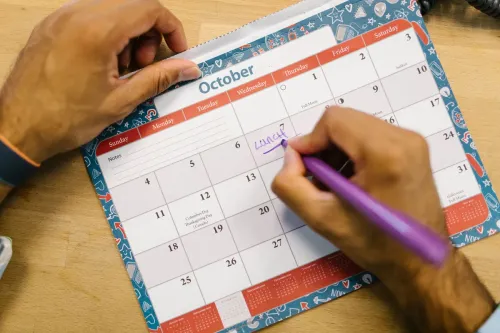
Days of the Week and Months in Tagalog
The days of the week and months in Tagalog are Spanish loanwords. Learn all 7 days and 12 months with pronunciation, plus how to say dates and 'every Monday.'

Ng vs Nang in Tagalog: The Spelling Rule
Ng vs nang sound identical but spell differently. Use ng to mark nouns (of, the object), and nang for how, when, repetition, and counting time.