lawiswis
lawiswís with stress marks
top part of bamboo; wind sound
Usage Note
Lawiswis is an onomatopoeic word evoking the rustling or swishing sound made by the feathery tops of bamboo swaying in the wind. It appears in poetry and descriptive prose to paint a pastoral, tranquil scene.
Examples
" Maganda ang lawiswis ng kawayan. "
Natural Translation
The rustling of the bamboo is lovely.
Literal Translation
Lovely the rustling of-the bamboo.
" Rinig ko ang lawiswis. "
Natural Translation
I hear the wind sound.
Literal Translation
Hear I the wind sound.
" Sa katahimikan ng gabi, ang lawiswis ng kawayang inaalog ng hangin ang tanging tunog na maririnig. "
Natural Translation
In the silence of the night, the rustling of the bamboo swayed by the wind is the only sound to be heard.
Literal Translation
In silence of-the night, the rustling of-the bamboo swayed of-the wind the only sound that can-be-heard.
Take Tagalog with you
The full course, a 12,500-word dictionary, and flashcards that make every word stick — free to start on iOS and Android.




Tagalog builds thousands of words from a few hundred roots.
How Tagalog words workRelated Words
Explore Tagalog by topic
Free guides on grammar, vocabulary, and culture to take you past single-word lookups.

Ang, Ng, Sa: The 3 Tagalog Case Markers Explained
Ang, ng, sa are the three Tagalog case markers every noun takes. Learn what each does, the personal forms si/ni/kay, plurals with mga, and clear examples.
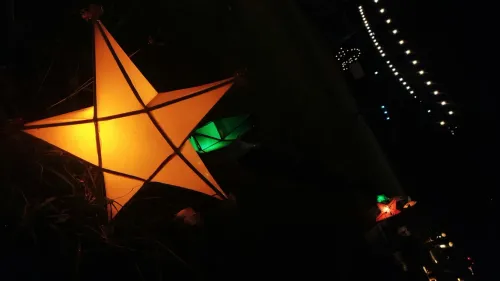
Philippine Christmas Traditions: World's Longest Holiday
Philippine Christmas traditions run four months — from Ber-month carols to Simbang Gabi dawn masses, Noche Buena feasts, and parol lanterns lighting every street.

Tagalog Slang Guide: 20 Words You'll Hear on TikTok
Tagalog slang explained: lodi, petmalu, werpa, astig, chika and more. Decode Filipino TikTok comments, group chats, and pop culture with this practical guide.
Tagalog Verb Focus System Explained (It's Not Active vs. Passive)
The Tagalog verb focus system isn't active vs. passive. Learn actor focus, object focus, and more with clear examples that finally make it click.