morena
moréna with stress marks
brown-skinned (female)
Usage Note
Morena is borrowed from Spanish and describes a woman or girl with a brown or tan complexion. In Philippine culture the word carries both descriptive and aesthetic weight — attitudes toward morena skin tones have evolved, with growing appreciation for natural Filipino complexions countering historical colorism rooted in colonial beauty standards. The masculine counterpart is moreno.
Examples
" Morena ang kapatid ko. "
Natural Translation
My sister is brown-skinned.
Literal Translation
Brown-skinned the sibling my.
" Ang babaeng morena ay may angking ganda na talagang nakakaakit. "
Natural Translation
The brown-skinned woman has an inherent beauty that is truly attractive.
Literal Translation
The woman brown-skinned is has inherent beauty that truly attractive.
" Ipinagmamalaki niya ngayon ang kanyang morenang kutis matapos lumaki sa lipunang humahanga sa maputi. "
Natural Translation
She now takes pride in her brown complexion after growing up in a society that admires fair skin.
Literal Translation
Takes-pride she now the her brown complexion after grew-up in society admiring of fair.
Take Tagalog with you
The full course, a 12,500-word dictionary, and flashcards that make every word stick — free to start on iOS and Android.




Tagalog builds thousands of words from a few hundred roots.
How Tagalog words workRelated Words
Explore Tagalog by topic
Free guides on grammar, vocabulary, and culture to take you past single-word lookups.
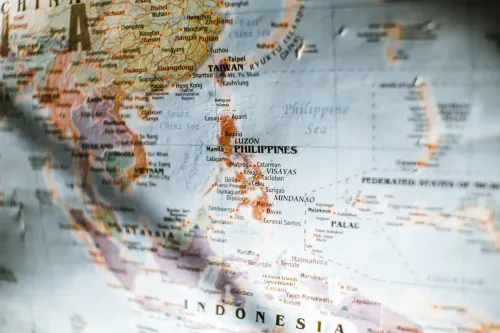
Philippines Geography for Learners: Islands & Language
Philippines geography for Tagalog learners: 7,641 islands, three island groups, and the Southern Luzon heartland where the Tagalog language was born.

How to Say "I Love You" in Tagalog: Phrases & Meaning
Learn how to say I love you in Tagalog. Mahal kita, Iniibig kita, and Filipino terms of endearment for partners, family, and friends — with cultural notes.
Tagalog Root Words: Learn a Few Hundred, Understand Thousands
Tagalog root words unlock vocabulary fast: learn a few hundred and recognize thousands. Real word families, examples, and a practical study strategy.
Mano Po and Filipino Etiquette: A Visitor's Guide
Mano po presses an elder's hand to your forehead as a blessing. Learn who to mano, how to lip-point, and the etiquette that wins over a Filipino family.