Usage Note
Morkon is a traditional Filipino dish of rolled beef flank steak stuffed with hard-boiled eggs, pickles, sausage, and carrots, then braised in tomato sauce. It is a festive dish often prepared for Christmas and birthdays, reflecting the depth of Spanish culinary influence on Filipino cuisine.
Examples
" Masarap ang morkon ni lola. "
Natural Translation
Grandmother's morkon is delicious.
Literal Translation
Delicious the morkon of grandmother.
" Ang espesyal na morkon na niluto ni lola ay laging ubos tuwing Pasko. "
Natural Translation
The special morkon cooked by grandmother is always sold out every Christmas.
Literal Translation
The special that morkon that cooked of grandmother is always used-up every Christmas.
" Tuwing Pasko, maaga pa lang ay abala na si nanay sa pagbabalot ng morkon habang inihahanda namin ang hapag-kainan. "
Natural Translation
Every Christmas, my mother is already busy wrapping the morkon early on while we prepare the dining table.
Literal Translation
Every Christmas, early still only is busy already mother in wrapping of morkon while preparing we the dining-table.
Take Tagalog with you
The full course, a 12,500-word dictionary, and flashcards that make every word stick — free to start on iOS and Android.




Tagalog builds thousands of words from a few hundred roots.
How Tagalog words workRelated Words
Explore Tagalog by topic
Free guides on grammar, vocabulary, and culture to take you past single-word lookups.

Tagalog Greetings: How to Say Hello, Goodbye & Po/Opo
Master Tagalog greetings with pronunciation: kumusta, magandang umaga, po and opo polite forms, time-of-day phrases, and the mano po tradition.

Na vs -ng in Tagalog: The Linker Rule Made Simple
When do you use na vs -ng in Tagalog? One simple rule, with clear examples, memory tips, and common mistakes explained for English-speaking beginners.

Seasons in the Philippines: A Tagalog Guide
The Philippines has two seasons, not four. Learn tag-araw, tag-ulan, and taglamig, the generative tag- prefix, and the weather vocabulary to match.
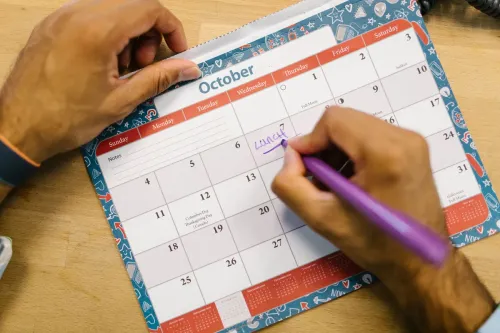
Days of the Week and Months in Tagalog
The days of the week and months in Tagalog are Spanish loanwords. Learn all 7 days and 12 months with pronunciation, plus how to say dates and 'every Monday.'