ngabngab
ngábngab with stress marks
to eat greedily; masticate using teeth
Usage Note
Ngabngab is an expressive, onomatopoeic-feeling word describing the act of chomping or gnawing at food, often with enthusiasm or greed. Used informally and with a slightly humorous register, it can function as a root for derived verb forms such as ngabngabin and nangabngab.
Examples
" Huwag mong ngabngabin ang pagkain. "
Natural Translation
Don't gobble up the food.
Literal Translation
Don't you eat-greedily the food.
" Hindi magandang tingnan ang pagkain niya nang ngabngab sa harap ng bisita. "
Natural Translation
It doesn't look good when he/she eats greedily in front of the guests.
Literal Translation
Not good to-look the eating his/her adverb-, greedily in front of guest.
" Gutom na gutom ang bata kaya parang walang modong nangabngab ito sa kanyang pagkain pagkaupo sa mesa. "
Natural Translation
The child was so hungry that he chomped at his food without manners as soon as he sat down at the table.
Literal Translation
Hungry very-hungry the child so like no manners that ate-greedily it on his food upon-sitting at table.
Take Tagalog with you
The full course, a 12,500-word dictionary, and flashcards that make every word stick — free to start on iOS and Android.




Tagalog builds thousands of words from a few hundred roots.
How Tagalog words workActor Focus Verbs
Related Words
Explore Tagalog by topic
Free guides on grammar, vocabulary, and culture to take you past single-word lookups.
Tagalog vs Filipino: What's the Difference & Which to Learn
Tagalog and Filipino aren't the same language — but they overlap almost completely. Here's the real difference and which one you should actually learn.
Po and Opo in Tagalog: Where to Put Them Right
Po and opo confuse learners — but placement follows one rule. Where po goes in a sentence, why it's opo not 'oo po', and the pronoun shift to learn.

Is Tagalog Hard to Learn? An Honest Answer
Tagalog takes around 1,100 hours to reach professional proficiency. Here is what is easy, what is hard, and what to expect at 3, 6, and 12 months.
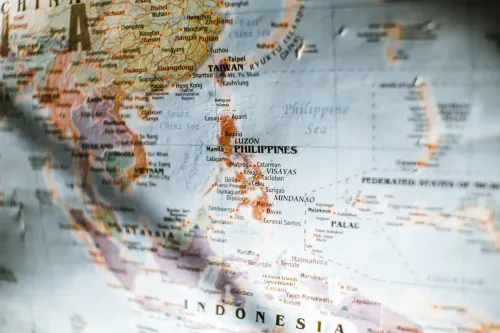
Philippines Geography for Learners: Islands & Language
Philippines geography for Tagalog learners: 7,641 islands, three island groups, and the Southern Luzon heartland where the Tagalog language was born.