ngasngas
ngásngas with stress marks
disorder or scandal
Usage Note
Ngasngas refers to noisy public disorder, bickering, or a messy scandal. It connotes not just the existence of a problem but the loud, disorganized commotion surrounding it. The word is reduplicated in form, mimicking the sense of ongoing chaos.
Examples
" Maraming ngasngas sa bayan. "
Natural Translation
There is much disorder in the town.
Literal Translation
Much disorder in-the town.
" Nagkaroon ng malaking ngasngas sa aming barangay kagabi dahil sa kalasingan. "
Natural Translation
There was a big scandal in our neighborhood last night due to drunkenness.
Literal Translation
Had of big scandal in our neighborhood last-night because to drunkenness.
" Kumalat ang ngasngas sa buong baryo nang malaman ng mga tao na ninakaw ang pondo ng kanilang samahan. "
Natural Translation
The scandal spread throughout the whole village when the people learned that the funds of their organization had been stolen.
Literal Translation
Spread the scandal in whole village when learned by-the people that stolen the fund of their organization.
Take Tagalog with you
The full course, a 12,500-word dictionary, and flashcards that make every word stick — free to start on iOS and Android.




Tagalog builds thousands of words from a few hundred roots.
How Tagalog words workRelated Words
- AWOL absence without leave
- Amboy short for American boy
- Ati ethnolinguistic group in Panay
- Balbalan ethnolinguistic group (Kalinga)
- Hiligaynon ethnolinguistic group/language
- Ilokana female native of the Ilocos region; Ilokana woman
- Ilokano Ethnolinguistic group in Ilocos
- Ilonggo Language/People of Western Visayas
Explore Tagalog by topic
Free guides on grammar, vocabulary, and culture to take you past single-word lookups.

Languages of the Philippines: Tagalog, Cebuano, and More
Languages of the Philippines: one national language (Filipino) plus 180+ regional languages. Here's who speaks what, where, and why it matters to you.

Tagalog Verb Conjugation: Aspects Made Simple
Tagalog verb conjugation uses aspects, not tenses. Learn the three aspects with -um- and mag- verbs, one reduplication rule, and clear example tables.
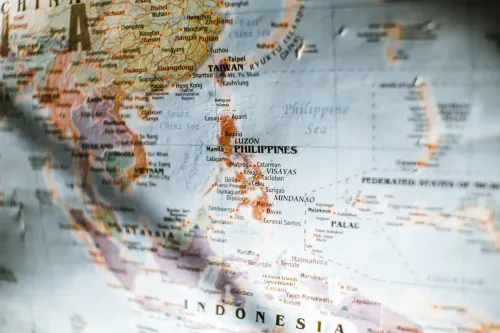
Philippines Geography for Learners: Islands & Language
Philippines geography for Tagalog learners: 7,641 islands, three island groups, and the Southern Luzon heartland where the Tagalog language was born.

Tagalog Greetings: How to Say Hello, Goodbye & Po/Opo
Master Tagalog greetings with pronunciation: kumusta, magandang umaga, po and opo polite forms, time-of-day phrases, and the mano po tradition.