ngasiwa
ngasiwà with stress marks
to manage or oversee
Usage Note
Ngasiwa means to supervise, administer, or take charge of something. It is a somewhat formal or literary word, more commonly encountered in written Tagalog than in everyday speech, where 'pamahalaan' or 'pangasiwaan' may be used instead.
Examples
" Siya ang nangangasiwa sa tindahan. "
Natural Translation
She is the one managing the store.
Literal Translation
She the one-managing in-the store.
" Seryoso ang kanyang ngasiwa sa mga manggagawa. "
Natural Translation
His/Her overseeing of the workers is serious.
Literal Translation
Serious the his/her manage to-the [plural] worker.
" Ipinagkatiwala sa kanya ang pangangasiwa sa proyekto dahil pinatunayan niyang kaya niyang pangasiwaan ang maraming tao nang maayos. "
Natural Translation
The management of the project was entrusted to him because he proved that he could oversee many people properly.
Literal Translation
Entrusted to him the management of-the project because proved he-that can he-that oversee the many people properly.
Take Tagalog with you
The full course, a 12,500-word dictionary, and flashcards that make every word stick — free to start on iOS and Android.




Tagalog builds thousands of words from a few hundred roots.
How Tagalog words workActor Focus Verbs
Object Focus Verbs
Related Words
Explore Tagalog by topic
Free guides on grammar, vocabulary, and culture to take you past single-word lookups.

Is Tagalog Hard to Learn? An Honest Answer
Tagalog takes around 1,100 hours to reach professional proficiency. Here is what is easy, what is hard, and what to expect at 3, 6, and 12 months.
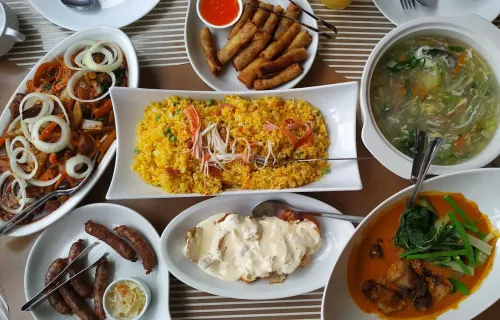
Filipino Food: 12 Essential Dishes (With Tagalog Names)
Filipino food, from adobo to halo-halo: learn the Tagalog names, pronunciations, and ingredients behind 12 dishes you'll want to try on your first trip.

Tagalog Affixes Explained: A Beginner's Guide to Word Building
Tagalog affixes turn one root word into dozens of meanings. Learn prefixes, infixes, suffixes, and circumfixes with clear examples for beginners.
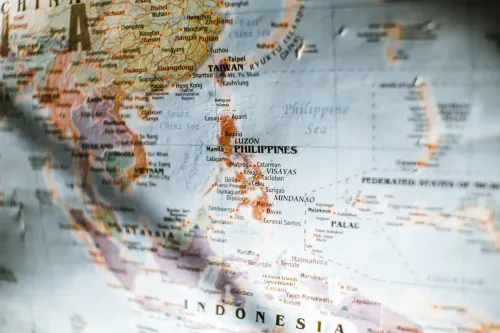
Philippines Geography for Learners: Islands & Language
Philippines geography for Tagalog learners: 7,641 islands, three island groups, and the Southern Luzon heartland where the Tagalog language was born.