mag-okupa
mag-okúpa with stress marks
to occupy
From root: okupa
Conjugations
Past (Completed)
nag-okupa
nag-o-KU-pa
occupied
Present (Incomplete)
nag-oookupa
nag-o-o-KU-pa
is occupying
Future (Contemplated)
mag-oookupa
mag-o-o-KU-pa
will occupy
Usage Note
Mag-okupa is the actor-focus mag- infinitive of okupa, from Spanish ocupar, covering both the physical occupation of space and the historical-colonial sense of territorial seizure. The actor-focus form foregrounds whoever is doing the occupying, and it pairs with okupahin when the place itself is the grammatical topic.
Examples
" Gusto naming mag-okupa ng bahay. "
Natural Translation
We want to occupy a house.
Literal Translation
Want we occupy of house.
" Nais ng pamilya na mag-okupa ng bakanteng kwarto. "
Natural Translation
The family desires to occupy a vacant room.
Literal Translation
Desire of family to occupy of vacant room.
" Pinilit ng mga residente na mag-okupa ng lupang matagal nang pinabayaan ng may-ari upang magkaroon sila ng matitirhan. "
Natural Translation
The residents insisted on occupying the land long abandoned by its owner so that they would have a place to live.
Literal Translation
Insisted by residents to occupy of land long-time already neglected by owner so-that have they of dwelling.
Take Tagalog with you
The full course, a 12,500-word dictionary, and flashcards that make every word stick — free to start on iOS and Android.




Tagalog builds thousands of words from a few hundred roots.
How Tagalog words workWord family
okupa has 1 related form built from the same root.
Related Words
Explore Tagalog by topic
Free guides on grammar, vocabulary, and culture to take you past single-word lookups.

Philippines Geography for Learners: Islands & Language
Philippines geography for Tagalog learners: 7,641 islands, three island groups, and the Southern Luzon heartland where the Tagalog language was born.

Ang, Ng, Sa: The 3 Tagalog Case Markers Explained
Ang, ng, sa are the three Tagalog case markers every noun takes. Learn what each does, the personal forms si/ni/kay, plurals with mga, and clear examples.
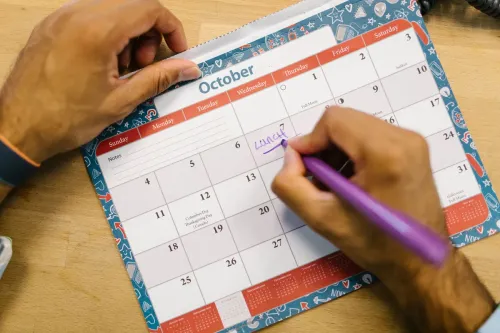
Days of the Week and Months in Tagalog
The days of the week and months in Tagalog are Spanish loanwords. Learn all 7 days and 12 months with pronunciation, plus how to say dates and 'every Monday.'

Tagalog Verb Conjugation: Aspects Made Simple
Tagalog verb conjugation uses aspects, not tenses. Learn the three aspects with -um- and mag- verbs, one reduplication rule, and clear example tables.