osipikasyon
osipikásyon with stress marks
ossification; process of hardening like bone
Usage Note
Osipikasyon is a highly specialized medical and biological term describing both the normal developmental hardening of cartilage into bone and, figuratively, the rigid entrenchment of ideas or institutions. It is almost exclusively found in textbooks and academic discourse, well outside everyday conversational Tagalog.
Examples
" Mabagal ang osipikasyon sa matanda. "
Natural Translation
Ossification is slow in the elderly.
Literal Translation
Slow the ossification in elderly.
" Ang osipikasyon ay isang mahalagang proseso sa paglaki. "
Natural Translation
Ossification is an important process in growth.
Literal Translation
The ossification is one important process in growth.
" Ipinakita ng pag-aaral kung paano nagaganap ang osipikasyon habang dahan-dahang tumitigas ang kartilago tungo sa buto. "
Natural Translation
The study showed how ossification occurs as the cartilage slowly hardens into bone.
Literal Translation
Showed the study how happens the ossification while slowly hardening the cartilage toward to bone.
Take Tagalog with you
The full course, a 12,500-word dictionary, and flashcards that make every word stick — free to start on iOS and Android.




Tagalog builds thousands of words from a few hundred roots.
How Tagalog words workRelated Words
Explore Tagalog by topic
Free guides on grammar, vocabulary, and culture to take you past single-word lookups.

Na vs -ng in Tagalog: The Linker Rule Made Simple
When do you use na vs -ng in Tagalog? One simple rule, with clear examples, memory tips, and common mistakes explained for English-speaking beginners.
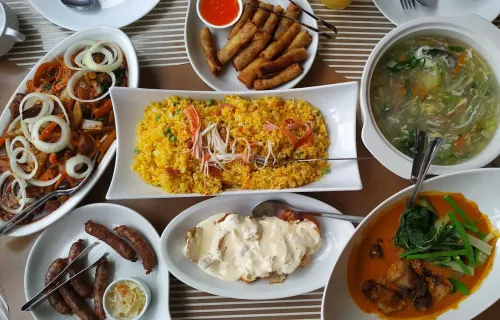
Filipino Food: 12 Essential Dishes (With Tagalog Names)
Filipino food, from adobo to halo-halo: learn the Tagalog names, pronunciations, and ingredients behind 12 dishes you'll want to try on your first trip.

Filipino Family Words and Honorifics: Ate, Kuya & Tita
Filipino family words like ate, kuya, tita, tito, lolo, and lola go far beyond family — learn how Filipinos use them with strangers, plus mano po etiquette.

Ang, Ng, Sa: The 3 Tagalog Case Markers Explained
Ang, ng, sa are the three Tagalog case markers every noun takes. Learn what each does, the personal forms si/ni/kay, plurals with mga, and clear examples.