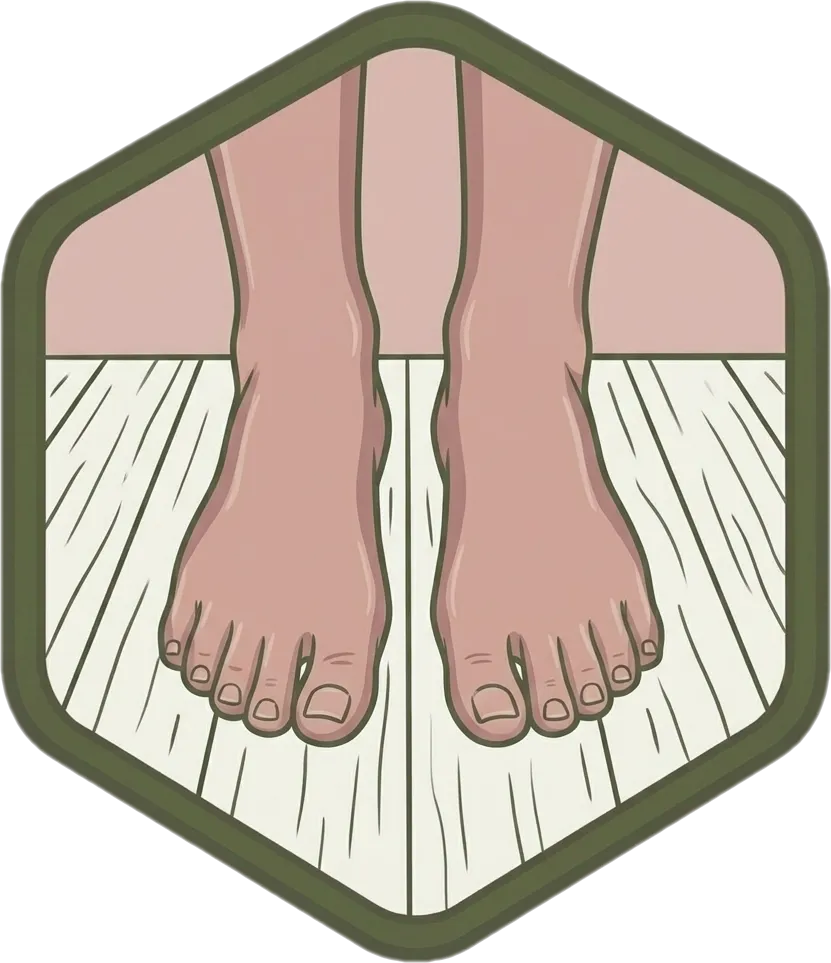
From root: paa
Conjugations
Past (Completed)
nagpaa
nag-pa-A
went barefoot
Present (Incomplete)
nagpapaa
nag-pa-pa-A
going barefoot
Future (Contemplated)
magpapaa
mag-pa-pa-A
will go barefoot
Usage Note
Magpaa is used when someone walks or goes around without shoes or slippers, which is common inside Filipino homes or in relaxed rural settings. It highlights the deliberate choice or state of being barefoot in various daily contexts.
Examples
" Gusto kong magpaa sa buhangin. "
Natural Translation
I want to go barefoot on the sand.
Literal Translation
Want I go-barefoot on-the sand.
" Masarap magpaa sa damuhan. "
Natural Translation
It feels great to go barefoot on the grass.
Literal Translation
Delicious to go barefoot on the grass.
" Tuwing umuuwi sila sa probinsya, mas gusto nilang magpaa kaysa magsuot ng tsinelas sa loob ng bahay. "
Natural Translation
Whenever they go home to the province, they prefer to go barefoot rather than wear slippers inside the house.
Literal Translation
Whenever go-home they to-the province, more want they go-barefoot than wear of slippers inside of house.
Take Tagalog with you
The full course, a 12,500-word dictionary, and flashcards that make every word stick — free to start on iOS and Android.




Tagalog builds thousands of words from a few hundred roots.
How Tagalog words workWord family
paa has 4 related forms built from the same root.
Related Words
Explore Tagalog by topic
Free guides on grammar, vocabulary, and culture to take you past single-word lookups.

Tagalog Root Words: Learn a Few Hundred, Understand Thousands
Tagalog root words unlock vocabulary fast: learn a few hundred and recognize thousands. Real word families, examples, and a practical study strategy.

Magkano: How to Ask "How Much" in Tagalog
Magkano means how much in Tagalog. Learn to ask a price, tell it apart from ilan and gaano, sound polite with po, and haggle at the palengke.

Seasons in the Philippines: A Tagalog Guide
The Philippines has two seasons, not four. Learn tag-araw, tag-ulan, and taglamig, the generative tag- prefix, and the weather vocabulary to match.

How to Say Sorry in Tagalog: Patawad vs Pasensya
How to say sorry in Tagalog: patawad, pasensya na, and paumanhin compared on a simple severity-and-formality ladder so you pick the right word every time.