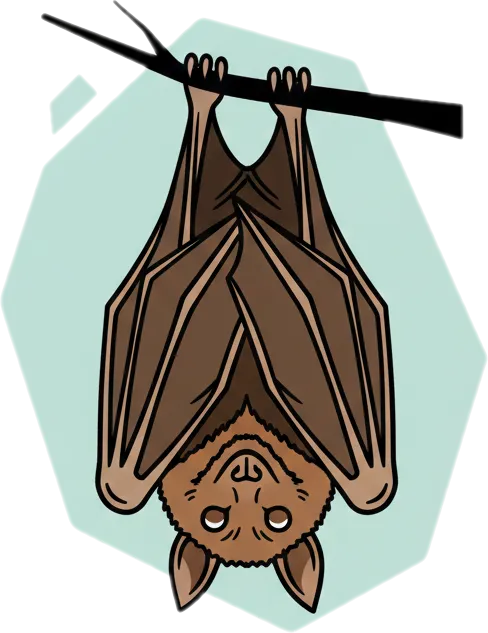
From root: paniki
Usage Note
Mapaniki describes a place that is heavily populated or infested with bats. You might use this to describe an old, dark, abandoned building or a deep cave.
Examples
" Mapaniki ang lumang bahay. "
Natural Translation
The old house is bat-infested.
Literal Translation
Bat-infested the old house.
" Ang lumang kweba ay napakapaniki. "
Natural Translation
The old cave is very infested with bats.
Literal Translation
The old cave is very infested-with-bats.
" Hindi kami nakapasok sa mapaniking kuweba dahil natakot ang mga bata sa amoy at ingay ng mga paniki. "
Natural Translation
We could not enter the bat-infested cave because the children were frightened by the smell and noise of the bats.
Literal Translation
Not we able-enter the bat-infested cave because frightened the children at smell and noise of the bats.
Take Tagalog with you
The full course, a 12,500-word dictionary, and flashcards that make every word stick — free to start on iOS and Android.




Tagalog builds thousands of words from a few hundred roots.
How Tagalog words workWord family
paniki has 1 related form built from the same root.
Related Words
Explore Tagalog by topic
Free guides on grammar, vocabulary, and culture to take you past single-word lookups.

Seasons in the Philippines: A Tagalog Guide
The Philippines has two seasons, not four. Learn tag-araw, tag-ulan, and taglamig, the generative tag- prefix, and the weather vocabulary to match.
Philippines Geography for Learners: Islands & Language
Philippines geography for Tagalog learners: 7,641 islands, three island groups, and the Southern Luzon heartland where the Tagalog language was born.

Is Tagalog Hard to Learn? An Honest Answer
Tagalog takes around 1,100 hours to reach professional proficiency. Here is what is easy, what is hard, and what to expect at 3, 6, and 12 months.

Na vs -ng in Tagalog: The Linker Rule Made Simple
When do you use na vs -ng in Tagalog? One simple rule, with clear examples, memory tips, and common mistakes explained for English-speaking beginners.