From root: pantay
Conjugations
Past (Completed)
nagpantay
nag-pan-TAY
was equal
Present (Incomplete)
nagpapantay
nag-pa-pan-TAY
is being equal
Future (Contemplated)
magpapantay
mag-pa-pan-TAY
will be equal
Usage Note
Magpantay is used when referring to making things level, even, or equal in physical dimensions like height and length, or in abstract contexts like social status. It often implies an active effort to align two or more items so they match perfectly.
Examples
" Magpantay tayo ng mga upuan. "
Natural Translation
Let's make the chairs level.
Literal Translation
Be-equal we of chairs.
" Dapat magpantay ang tingin sa lahat. "
Natural Translation
The perspective on everyone should be equal.
Literal Translation
Should to-be-equal the view at all.
" Bago natin idikit ang mga larawan, kailangan muna nating magpantay ng taas ng bawat isa. "
Natural Translation
Before we hang the pictures, we first need to make the height of each one even.
Literal Translation
Before we stick the pictures, need first we be-equal of height of each one.
Take Tagalog with you
The full course, a 12,500-word dictionary, and flashcards that make every word stick — free to start on iOS and Android.




Tagalog builds thousands of words from a few hundred roots.
How Tagalog words workWord family
pantay has 8 related forms built from the same root.
Related Words
Explore Tagalog by topic
Free guides on grammar, vocabulary, and culture to take you past single-word lookups.

Na vs -ng in Tagalog: The Linker Rule Made Simple
When do you use na vs -ng in Tagalog? One simple rule, with clear examples, memory tips, and common mistakes explained for English-speaking beginners.
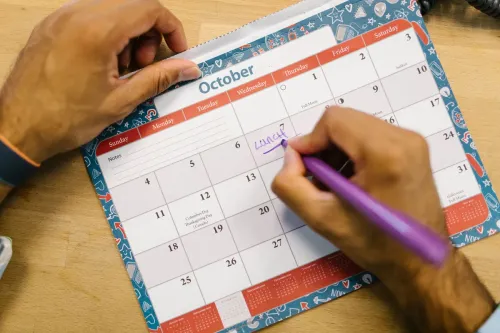
Days of the Week and Months in Tagalog
The days of the week and months in Tagalog are Spanish loanwords. Learn all 7 days and 12 months with pronunciation, plus how to say dates and 'every Monday.'

Seasons in the Philippines: A Tagalog Guide
The Philippines has two seasons, not four. Learn tag-araw, tag-ulan, and taglamig, the generative tag- prefix, and the weather vocabulary to match.

Languages of the Philippines: Tagalog, Cebuano, and More
Languages of the Philippines: one national language (Filipino) plus 180+ regional languages. Here's who speaks what, where, and why it matters to you.