From root: patay
Conjugations
Past (Completed)
nagpatay
nag-pa-TAY
slaughtered
Present (Incomplete)
nagpapatay
nag-pa-pa-TAY
is slaughtering
Future (Contemplated)
magpapatay
mag-pa-pa-TAY
will slaughter
Usage Note
Magpatay is used when referring to the slaughtering of livestock or poultry, typically for consumption during special occasions like a fiesta or a wedding. It specifically implies the preparation of animals for food and is distinct from the general term for killing.
Examples
" Magpapatay kami ng manok mamaya. "
Natural Translation
We will slaughter a chicken later.
Literal Translation
Will-slaughter we of chicken later.
" Mahirap magpatay ng baboy nang mag-isa. "
Natural Translation
It is hard to slaughter a pig alone.
Literal Translation
Hard slaughter of pig link-, alone.
" Tuwing may piyesta sa amin, nagpapatay ang mga kalalakihan ng baboy at baka para sa handaan. "
Natural Translation
Whenever there is a fiesta in our place, the men slaughter pigs and cattle for the feast.
Literal Translation
Every-time has fiesta in us, slaughter the plural men of pig and cattle for the feast.
Take Tagalog with you
The full course, a 12,500-word dictionary, and flashcards that make every word stick — free to start on iOS and Android.




Tagalog builds thousands of words from a few hundred roots.
How Tagalog words workWord family
patay has 11 related forms built from the same root.
Related Words
Explore Tagalog by topic
Free guides on grammar, vocabulary, and culture to take you past single-word lookups.

Magkano: How to Ask "How Much" in Tagalog
Magkano means how much in Tagalog. Learn to ask a price, tell it apart from ilan and gaano, sound polite with po, and haggle at the palengke.
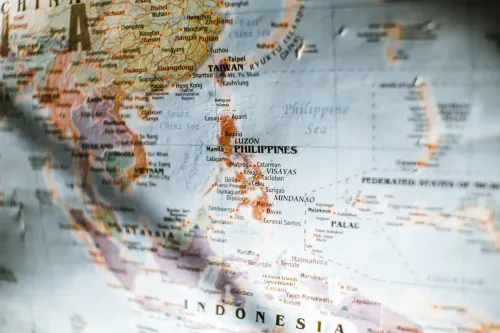
Philippines Geography for Learners: Islands & Language
Philippines geography for Tagalog learners: 7,641 islands, three island groups, and the Southern Luzon heartland where the Tagalog language was born.

Filipino Family Words and Honorifics: Ate, Kuya & Tita
Filipino family words like ate, kuya, tita, tito, lolo, and lola go far beyond family — learn how Filipinos use them with strangers, plus mano po etiquette.

Spaced Repetition for Tagalog: How Flashcards Make Words Stick
Cramming Tagalog vocabulary fails. See how spaced repetition — the science behind smart flashcards — makes words stick for the long term.