
From root: pista
Conjugations
Past (Completed)
ipinista
i-pi-NIS-ta
celebrated as a feast
Present (Incomplete)
ipinipista
i-pi-ni-PIS-ta
celebrating as a feast
Future (Contemplated)
ipipista
i-pi-PIS-ta
will celebrate as a feast
Usage Note
Ipista is used when designating a specific day or occasion to be celebrated as a feast, typically in honor of a patron saint or a significant community milestone. This verb focuses on the object or event being elevated to the status of a formal festival.
Examples
" Ipipista nila ang araw na ito. "
Natural Translation
They will celebrate this day as a feast.
Literal Translation
Will-celebrate-as-feast they the day this.
" Gusto nilang ipista ang bagong bahay. "
Natural Translation
They want to celebrate the new house with a feast.
Literal Translation
Want they celebrate-as-a-feast the new house.
" Ipinista ng mga taga-baryo ang kaarawan ng kanilang patron, kaya may prusisyon at handaan sa bawat sulok. "
Natural Translation
The villagers celebrated their patron's feast day as a festival, so there was a procession and feasting on every corner.
Literal Translation
Celebrated-as-feast by the villagers the birthday of their patron, so there-is procession and feasting at every corner.
Take Tagalog with you
The full course, a 12,500-word dictionary, and flashcards that make every word stick — free to start on iOS and Android.




Tagalog builds thousands of words from a few hundred roots.
How Tagalog words workWord family
pista has 7 related forms built from the same root.
Related Words
Explore Tagalog by topic
Free guides on grammar, vocabulary, and culture to take you past single-word lookups.

Tagalog Slang Guide: 20 Words You'll Hear on TikTok
Tagalog slang explained: lodi, petmalu, werpa, astig, chika and more. Decode Filipino TikTok comments, group chats, and pop culture with this practical guide.

Mano Po and Filipino Etiquette: A Visitor's Guide
Mano po presses an elder's hand to your forehead as a blessing. Learn who to mano, how to lip-point, and the etiquette that wins over a Filipino family.

Tagalog vs Filipino: What's the Difference & Which to Learn
Tagalog and Filipino aren't the same language — but they overlap almost completely. Here's the real difference and which one you should actually learn.
Days of the Week and Months in Tagalog
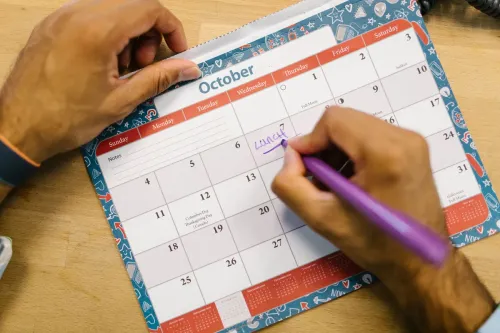
The days of the week and months in Tagalog are Spanish loanwords. Learn all 7 days and 12 months with pronunciation, plus how to say dates and 'every Monday.'