Usage Note
Salvage carries a chilling inverted meaning in Philippine English and Filipino — it refers to extrajudicial killing, often by authorities or vigilante groups. This semantic shift likely arose during the Marcos martial law era, making it a stark feature of Philippine political language and human rights discourse.
Examples
" Sinalvage daw ang lalaki. "
Natural Translation
They say the man was summarily executed.
Literal Translation
Was-summarily-executed reportedly the man.
" Nakita nila ang salvage na biktima. "
Natural Translation
They saw the summarily executed victim.
Literal Translation
Saw they the salvage that victim.
" Maraming biktima noong panahon ng batas militar ang sinalvage at ang mga pamilya nila ay hindi kailanman nakahanap ng katarungan. "
Natural Translation
Many victims during the martial law period were summarily executed, and their families never found justice.
Literal Translation
Many victim during time of martial law were-summarily-executed and the families their never found of justice.
Take Tagalog with you
The full course, a 12,500-word dictionary, and flashcards that make every word stick — free to start on iOS and Android.




Tagalog builds thousands of words from a few hundred roots.
How Tagalog words workRelated Words
Explore Tagalog by topic
Free guides on grammar, vocabulary, and culture to take you past single-word lookups.
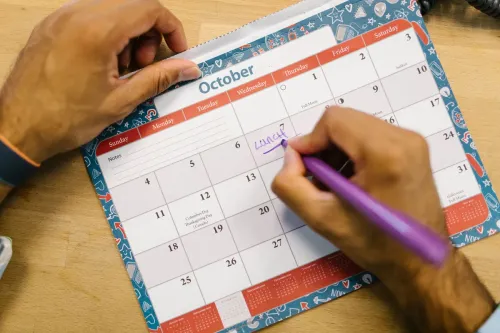
Days of the Week and Months in Tagalog
The days of the week and months in Tagalog are Spanish loanwords. Learn all 7 days and 12 months with pronunciation, plus how to say dates and 'every Monday.'

Tagalog Affixes Explained: A Beginner's Guide to Word Building
Tagalog affixes turn one root word into dozens of meanings. Learn prefixes, infixes, suffixes, and circumfixes with clear examples for beginners.

Ng vs Nang in Tagalog: The Spelling Rule
Ng vs nang sound identical but spell differently. Use ng to mark nouns (of, the object), and nang for how, when, repetition, and counting time.

Tagalog Time Expressions: Past, Present & Future Guide
Tagalog has no tenses — it uses aspect. Learn time words, days of the week, clock time, and the aspect system, with vocabulary tables and cultural notes.