From root: sama
Conjugations
Past (Completed)
sinamahan
si-na-ma-HAN
accompanied
Present (Incomplete)
sinasamahan
si-na-sa-ma-HAN
accompanying
Future (Contemplated)
sasamahan
sa-sa-ma-HAN
will accompany
Usage Note
Samahan is used when asking someone to go somewhere with you or to keep you company in a specific activity. It is often used in polite requests because Filipino culture places a high value on social accompaniment and shared experiences.
Examples
" Samahan mo ako sa palengke. "
Natural Translation
Come with me to the market.
Literal Translation
Accompany you me to market.
" Mabuting samahan ang lola sa labas. "
Natural Translation
It is good to accompany the grandma outside.
Literal Translation
Good accompany the grandma outside.
" Pakiusap, samahan mo ang lola sa ospital dahil kailangan niya ng kasama sa kanyang tsek-ap bukas. "
Natural Translation
Please accompany grandma to the hospital because she needs someone with her at her checkup tomorrow.
Literal Translation
Please, accompany you the grandma to hospital because needs she of companion at her checkup tomorrow.
Take Tagalog with you
The full course, a 12,500-word dictionary, and flashcards that make every word stick — free to start on iOS and Android.




Tagalog builds thousands of words from a few hundred roots.
How Tagalog words workWord family
sama has 11 related forms built from the same root.
Related Words
Explore Tagalog by topic
Free guides on grammar, vocabulary, and culture to take you past single-word lookups.

Mano Po and Filipino Etiquette: A Visitor's Guide
Mano po presses an elder's hand to your forehead as a blessing. Learn who to mano, how to lip-point, and the etiquette that wins over a Filipino family.
Days of the Week and Months in Tagalog
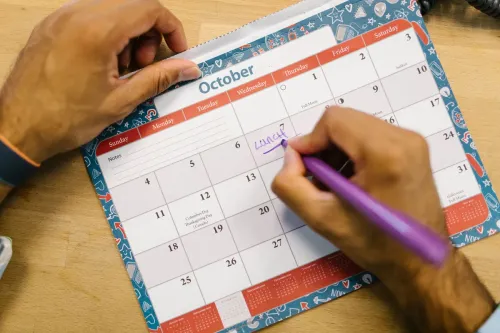
The days of the week and months in Tagalog are Spanish loanwords. Learn all 7 days and 12 months with pronunciation, plus how to say dates and 'every Monday.'

Na vs -ng in Tagalog: The Linker Rule Made Simple
When do you use na vs -ng in Tagalog? One simple rule, with clear examples, memory tips, and common mistakes explained for English-speaking beginners.

Tagalog Pronouns Explained: Complete Chart with Examples
Every Tagalog pronoun explained with clear charts: ang/ng/sa forms, tayo vs kami, ikaw vs ka, politeness markers, and the mistakes beginners make.