santelmo
santélmo with stress marks
St. Elmo's fire
Usage Note
Santelmo refers to the weather phenomenon of St. Elmo's fire — an electrical plasma glow seen on ship masts and trees during storms — derived from the Spanish patron saint of sailors, San Telmo. In Filipino folklore, santelmo also denotes a mysterious floating fireball that wanders at night, believed to be a lost soul or an omen. The word straddles science and superstition in local culture.
Examples
" Nakakita sila ng santelmo. "
Natural Translation
They saw a fireball.
Literal Translation
Saw they of fireball.
" Nakakita sila ng santelmo. "
Natural Translation
They saw St. Elmo's fire.
Literal Translation
Saw they of St.-Elmo's-fire.
" Ayon sa mga matatanda sa baryo, ang santelmo na lumulutang sa palayan ay kaluluwa raw ng isang naligaw na manlalakbay. "
Natural Translation
According to the elders in the village, the fireball that floats over the rice field is said to be the soul of a lost traveler.
Literal Translation
According to plural elder in village, the fireball linker floating in rice-field is soul reportedly of one lost linker traveler.
Take Tagalog with you
The full course, a 12,500-word dictionary, and flashcards that make every word stick — free to start on iOS and Android.




Tagalog builds thousands of words from a few hundred roots.
How Tagalog words workRelated Words
Explore Tagalog by topic
Free guides on grammar, vocabulary, and culture to take you past single-word lookups.

Is Tagalog Hard to Learn? An Honest Answer
Tagalog takes around 1,100 hours to reach professional proficiency. Here is what is easy, what is hard, and what to expect at 3, 6, and 12 months.
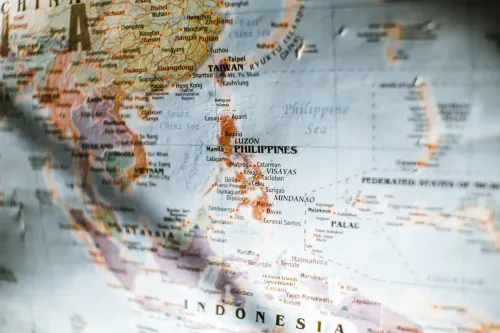
Philippines Geography for Learners: Islands & Language
Philippines geography for Tagalog learners: 7,641 islands, three island groups, and the Southern Luzon heartland where the Tagalog language was born.

Philippine Christmas Traditions: World's Longest Holiday
Philippine Christmas traditions run four months — from Ber-month carols to Simbang Gabi dawn masses, Noche Buena feasts, and parol lanterns lighting every street.

Filipino Family Words and Honorifics: Ate, Kuya & Tita
Filipino family words like ate, kuya, tita, tito, lolo, and lola go far beyond family — learn how Filipinos use them with strangers, plus mano po etiquette.