sapol
sápol with stress marks
hit hard; since the beginning
Usage Note
Sapol functions in two distinct ways: as a verb, it means to land a hard, direct blow; as an adverb, it means from the very start or since the beginning ('sapol pa noon'). The dual usage is common in informal and colloquial speech, and the adverbial sense is very frequently heard in casual conversation.
Examples
" Sapol siya sa mukha. "
Natural Translation
He got hit hard in the face.
Literal Translation
Hit-hard he on face.
" Sapol ang bola sa kanyang ulo. "
Natural Translation
The ball hit his/her head hard.
Literal Translation
Hit-hard the ball on his/her head.
" Sapol pa noong bata si Lino ay mahilig na siyang magbasa, kaya hindi nakapagtatakang naging guro siya. "
Natural Translation
Ever since he was a child, Lino has loved to read, so it's no surprise he became a teacher.
Literal Translation
Since-the-start still when child Lino (marker) fond already he to-read, so not surprising became teacher he.
Take Tagalog with you
The full course, a 12,500-word dictionary, and flashcards that make every word stick — free to start on iOS and Android.




Tagalog builds thousands of words from a few hundred roots.
How Tagalog words workObject Focus Verbs
Related Words
Explore Tagalog by topic
Free guides on grammar, vocabulary, and culture to take you past single-word lookups.

Tagalog Word Order: Sentence Structure Made Simple
Why Tagalog puts the verb first, and how ang, ng, and sa markers work. A clear guide to VSO word order, forming questions, and negation.
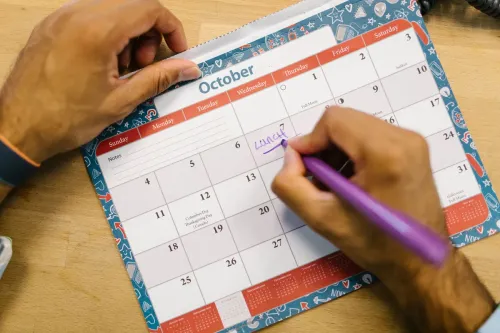
Days of the Week and Months in Tagalog
The days of the week and months in Tagalog are Spanish loanwords. Learn all 7 days and 12 months with pronunciation, plus how to say dates and 'every Monday.'

Ng vs Nang in Tagalog: The Spelling Rule
Ng vs nang sound identical but spell differently. Use ng to mark nouns (of, the object), and nang for how, when, repetition, and counting time.
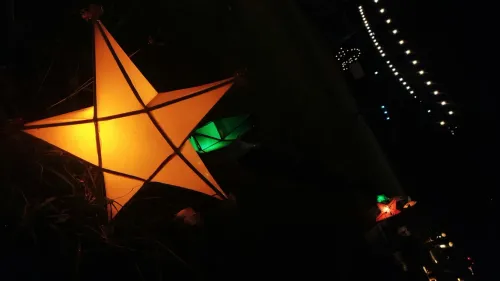
Philippine Christmas Traditions: World's Longest Holiday
Philippine Christmas traditions run four months — from Ber-month carols to Simbang Gabi dawn masses, Noche Buena feasts, and parol lanterns lighting every street.