
From root: saya
Usage Note
Masaya is the most common adjective for happiness, applicable to people, events, and atmospheres alike. Filipino culture attaches great value to communal joy, so masaya frequently describes collective experiences — fiestas, reunions, and holidays — as much as personal states of feeling.
Examples
" Masaya kami ngayon. "
Natural Translation
We are happy today.
Literal Translation
Happy we today.
" Masaya ako ngayon. "
Natural Translation
I am happy today.
Literal Translation
Happy I today.
" Tuwing may piyesta sa aming bayan, masaya ang lahat dahil nagtitipon ang buong pamilya mula sa iba't ibang lugar. "
Natural Translation
Whenever there's a fiesta in our town, everyone is happy because the whole family gathers from different places.
Literal Translation
Every-time has fiesta in our town, happy the all because gathers the whole family from different places.
Take Tagalog with you
The full course, a 12,500-word dictionary, and flashcards that make every word stick — free to start on iOS and Android.




Tagalog builds thousands of words from a few hundred roots.
How Tagalog words workWord family
saya has 9 related forms built from the same root.
Related Words
Explore Tagalog by topic
Free guides on grammar, vocabulary, and culture to take you past single-word lookups.

Mano Po and Filipino Etiquette: A Visitor's Guide
Mano po presses an elder's hand to your forehead as a blessing. Learn who to mano, how to lip-point, and the etiquette that wins over a Filipino family.
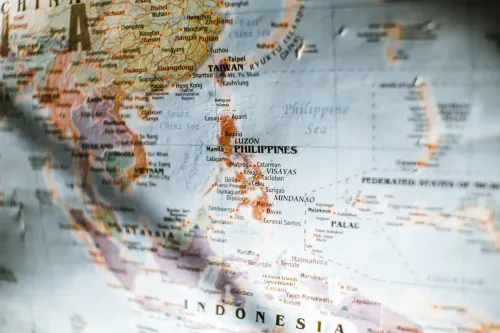
Philippines Geography for Learners: Islands & Language
Philippines geography for Tagalog learners: 7,641 islands, three island groups, and the Southern Luzon heartland where the Tagalog language was born.

Ang, Ng, Sa: The 3 Tagalog Case Markers Explained
Ang, ng, sa are the three Tagalog case markers every noun takes. Learn what each does, the personal forms si/ni/kay, plurals with mga, and clear examples.
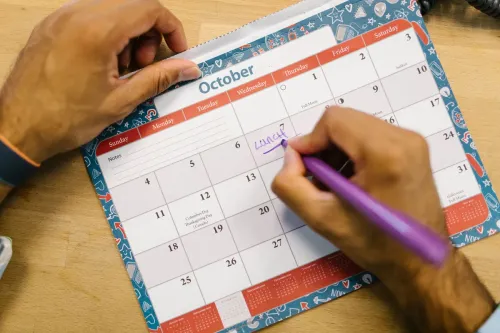
Days of the Week and Months in Tagalog
The days of the week and months in Tagalog are Spanish loanwords. Learn all 7 days and 12 months with pronunciation, plus how to say dates and 'every Monday.'