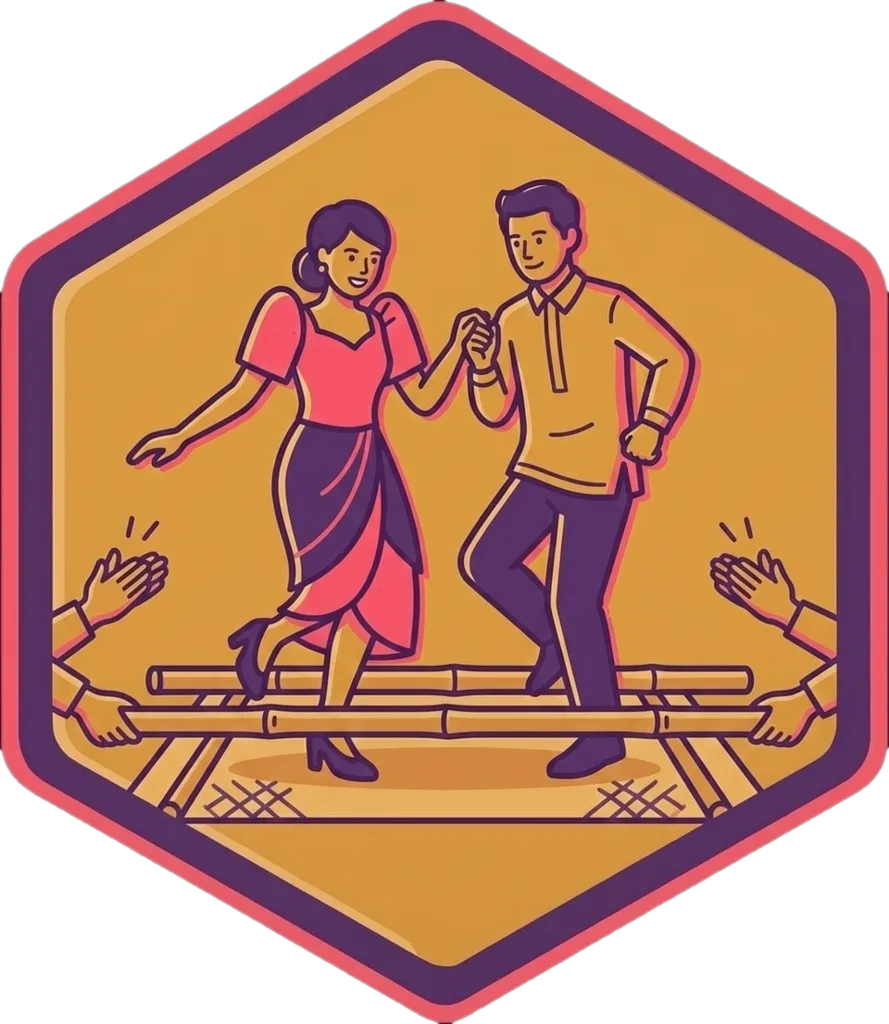
From root: sayaw
Conjugations
Past (Completed)
nagsayaw
nag-sa-YAW
danced
Present (Incomplete)
nagsasayaw
nag-sa-sa-YAW
dancing
Future (Contemplated)
magsasayaw
mag-sa-sa-YAW
will dance
Usage Note
Magsayaw is used when focusing on the person performing the action of dancing, often in social gatherings or performances. It emphasizes the activity itself and is frequently used in imperatives or when inviting others to join in a dance.
Examples
" Gusto kong magsayaw ngayon. "
Natural Translation
I want to dance now.
Literal Translation
Want I to-dance now.
" Marunong ka bang magsayaw ng tinikling? "
Natural Translation
Do you know how to dance the tinikling?
Literal Translation
Know you question to dance of tinikling?
" Tuwing may handaan sa amin, hindi mapigilan ng aking lola na magsayaw kasabay ng lumang musika. "
Natural Translation
Whenever there's a party at our place, my grandmother can't help dancing along to the old music.
Literal Translation
Every-time has party at our, not can-stop of my grandmother to-dance along of old music.
Take Tagalog with you
The full course, a 12,500-word dictionary, and flashcards that make every word stick — free to start on iOS and Android.




Tagalog builds thousands of words from a few hundred roots.
How Tagalog words workWord family
sayaw has 7 related forms built from the same root.
Related Words
Explore Tagalog by topic
Free guides on grammar, vocabulary, and culture to take you past single-word lookups.
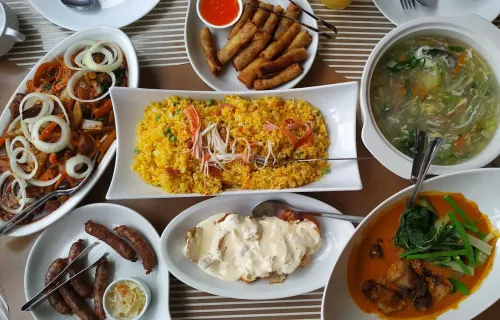
Filipino Food: 12 Essential Dishes (With Tagalog Names)
Filipino food, from adobo to halo-halo: learn the Tagalog names, pronunciations, and ingredients behind 12 dishes you'll want to try on your first trip.

Tagalog Slang Guide: 20 Words You'll Hear on TikTok
Tagalog slang explained: lodi, petmalu, werpa, astig, chika and more. Decode Filipino TikTok comments, group chats, and pop culture with this practical guide.

Tagalog Verb Conjugation: Aspects Made Simple
Tagalog verb conjugation uses aspects, not tenses. Learn the three aspects with -um- and mag- verbs, one reduplication rule, and clear example tables.

Po and Opo in Tagalog: Where to Put Them Right
Po and opo confuse learners — but placement follows one rule. Where po goes in a sentence, why it's opo not 'oo po', and the pronoun shift to learn.