silbato
silbáto with stress marks
a whistle; sound of a siren
Usage Note
Silbato is borrowed from Spanish silbato and refers both to the physical whistle instrument and the sharp, piercing sound it makes. It is common in sports, traffic control, and emergency contexts across the Philippines.
Examples
" Hinipan niya ang silbato. "
Natural Translation
He blew the whistle.
Literal Translation
Blew he the whistle.
" Narinig namin ang silbato ng pulis. "
Natural Translation
We heard the whistle of the police.
Literal Translation
Heard we the whistle of police.
" Nang hinipan ng referee ang silbato, huminto ang lahat ng manlalaro at nagtipon sa gitna ng larangan. "
Natural Translation
When the referee blew the whistle, all the players stopped and gathered in the middle of the field.
Literal Translation
When blew the referee the whistle, stopped all of player and gathered in middle of field.
Take Tagalog with you
The full course, a 12,500-word dictionary, and flashcards that make every word stick — free to start on iOS and Android.




Tagalog builds thousands of words from a few hundred roots.
How Tagalog words workActor Focus Verbs
Related Words
Explore Tagalog by topic
Free guides on grammar, vocabulary, and culture to take you past single-word lookups.
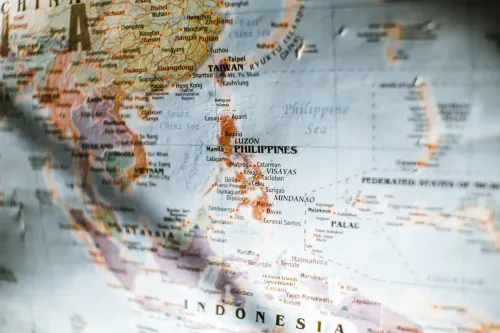
Philippines Geography for Learners: Islands & Language
Philippines geography for Tagalog learners: 7,641 islands, three island groups, and the Southern Luzon heartland where the Tagalog language was born.

Ng vs Nang in Tagalog: The Spelling Rule
Ng vs nang sound identical but spell differently. Use ng to mark nouns (of, the object), and nang for how, when, repetition, and counting time.

Tagalog Time Expressions: Past, Present & Future Guide
Tagalog has no tenses — it uses aspect. Learn time words, days of the week, clock time, and the aspect system, with vocabulary tables and cultural notes.
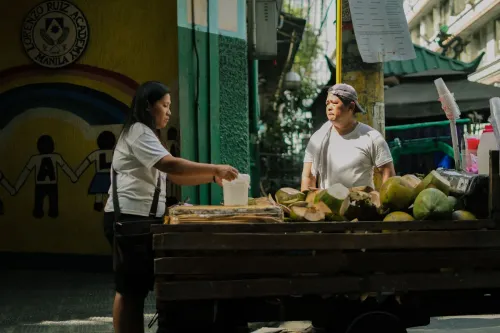
Magkano: How to Ask "How Much" in Tagalog
Magkano means how much in Tagalog. Learn to ask a price, tell it apart from ilan and gaano, sound polite with po, and haggle at the palengke.