From root: silip
Conjugations
Past (Completed)
sinilipan
si-ni-li-PAN
peeped through
Present (Incomplete)
sinisilipan
si-ni-si-li-PAN
peeping through
Future (Contemplated)
sisilipan
si-si-li-PAN
will peep through
Usage Note
Silipan is used when the focus of the action is the specific person or opening being peeped through, often implying a surreptitious or intrusive look. It is commonly used in informal contexts to warn someone about peeping or to describe looking into a restricted space.
Examples
" Huwag mong silipan ang bintana. "
Natural Translation
Don't peep through the window.
Literal Translation
Don't you peep-through the window.
" Ayaw mong silipan ang kwarto. "
Natural Translation
You don't want to peep through the room.
Literal Translation
Dislike you peep-through the room.
" Sinilipan ng bata ang butas sa pader para makita kung sino ang nasa kabilang bahay. "
Natural Translation
The child peeped through the hole in the wall to see who was in the house next door.
Literal Translation
Peeped-through of child the hole at wall so see if who the at-the other house.
Take Tagalog with you
The full course, a 12,500-word dictionary, and flashcards that make every word stick — free to start on iOS and Android.




Tagalog builds thousands of words from a few hundred roots.
How Tagalog words workWord family
silip has 7 related forms built from the same root.
Related Words
Explore Tagalog by topic
Free guides on grammar, vocabulary, and culture to take you past single-word lookups.
Days of the Week and Months in Tagalog
The days of the week and months in Tagalog are Spanish loanwords. Learn all 7 days and 12 months with pronunciation, plus how to say dates and 'every Monday.'

How to Say "I Love You" in Tagalog: Phrases & Meaning
Learn how to say I love you in Tagalog. Mahal kita, Iniibig kita, and Filipino terms of endearment for partners, family, and friends — with cultural notes.

How Long Does It Take to Learn Tagalog?
Survival Tagalog takes ~3-4 weeks and comfortable conversation 6-12 months. FSI's 1,100 hours is the professional bar, not the talking-to-family bar.
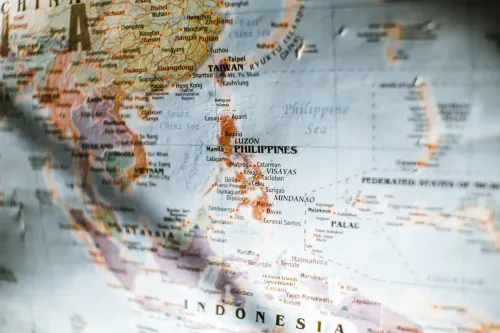
Philippines Geography for Learners: Islands & Language
Philippines geography for Tagalog learners: 7,641 islands, three island groups, and the Southern Luzon heartland where the Tagalog language was born.