sumimangot
sumimangót with stress marks
to scowl
From root: simangot
Conjugations
Past (Completed)
sumimangot
su-mi-ma-NGOT
scowled
Present (Incomplete)
sumisimangot
su-mi-si-ma-NGOT
is scowling
Future (Contemplated)
sisimangot
si-si-ma-NGOT
will scowl
Usage Note
Sumimangot is the actor-focus -um- form of simangot, used for making a scowling or frowning face in response to something unwelcome. It is a vivid, expressive verb common in everyday observation of someone's visible displeasure or sulky mood.
Examples
" Huwag kang sumimangot sa larawan. "
Natural Translation
Don't scowl in the photo.
Literal Translation
Don't you to-scowl in photo.
" Masakit sa mata ang sumimangot sa harap ng iyong mga bisita. "
Natural Translation
It is unpleasant to scowl in front of your guests.
Literal Translation
Painful to eye the to-scowl at front of your guests.
" Tuwing hindi nasusunod ang gusto niya, sumisimangot ang bata at tumatanggi siyang makipaglaro sa kaniyang mga kaklase. "
Natural Translation
Whenever he doesn't get his way, the child scowls and refuses to play with his classmates.
Literal Translation
Every-time not followed the want his, scowling the child and refusing he to-play with his classmates.
Take Tagalog with you
The full course, a 12,500-word dictionary, and flashcards that make every word stick — free to start on iOS and Android.




Tagalog builds thousands of words from a few hundred roots.
How Tagalog words workRelated Words
Explore Tagalog by topic
Free guides on grammar, vocabulary, and culture to take you past single-word lookups.

Filipino Food: 12 Essential Dishes (With Tagalog Names)
Filipino food, from adobo to halo-halo: learn the Tagalog names, pronunciations, and ingredients behind 12 dishes you'll want to try on your first trip.

Tagalog Word Order: Sentence Structure Made Simple
Why Tagalog puts the verb first, and how ang, ng, and sa markers work. A clear guide to VSO word order, forming questions, and negation.

Po and Opo in Tagalog: Where to Put Them Right
Po and opo confuse learners — but placement follows one rule. Where po goes in a sentence, why it's opo not 'oo po', and the pronoun shift to learn.
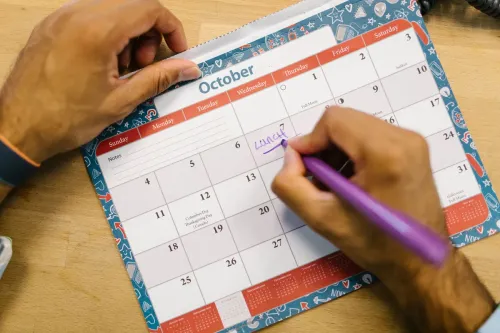
Days of the Week and Months in Tagalog
The days of the week and months in Tagalog are Spanish loanwords. Learn all 7 days and 12 months with pronunciation, plus how to say dates and 'every Monday.'