simutin
simutín with stress marks
to gather it all up
From root: simot
Conjugations
Past (Completed)
sinimot
si-NI-mot
gathered everything up
Present (Incomplete)
sinisimot
si-ni-SI-mot
is being gathered up
Future (Contemplated)
sisimutin
si-si-mu-TIN
will be gathered up
Usage Note
Simutin is the object-focus -in form of simot, used when the leftover items — food, belongings, or resources — being completely gathered are the grammatical focus. It implies thoroughness and completeness; nothing should be left. It pairs with the actor-focus magsimot.
Examples
" Simutin mo ang kanin sa plato. "
Natural Translation
Gather up all the rice on the plate.
Literal Translation
Gather-up you the rice on plate.
" Kailangan mong simutin ang natitirang ulam sa mangkok para walang masayang. "
Natural Translation
You need to gather up all the remaining food in the bowl so nothing goes to waste.
Literal Translation
Need you to-gather-up the remaining dish in bowl so none to-waste.
" Bago kami umalis sa piknik, sinimot namin ang lahat ng kalat para walang maiwang basura sa damuhan. "
Natural Translation
Before we left the picnic, we gathered up all the litter so no trash would be left behind on the grass.
Literal Translation
Before we to-leave from picnic, gathered-up we the all of litter so none to-be-left trash on grass.
Take Tagalog with you
The full course, a 12,500-word dictionary, and flashcards that make every word stick — free to start on iOS and Android.




Tagalog builds thousands of words from a few hundred roots.
How Tagalog words workWord family
simot has 1 related form built from the same root.
Related Words
Explore Tagalog by topic
Free guides on grammar, vocabulary, and culture to take you past single-word lookups.

Tagalog Pronouns Explained: Complete Chart with Examples
Every Tagalog pronoun explained with clear charts: ang/ng/sa forms, tayo vs kami, ikaw vs ka, politeness markers, and the mistakes beginners make.

Tagalog Greetings: How to Say Hello, Goodbye & Po/Opo
Master Tagalog greetings with pronunciation: kumusta, magandang umaga, po and opo polite forms, time-of-day phrases, and the mano po tradition.
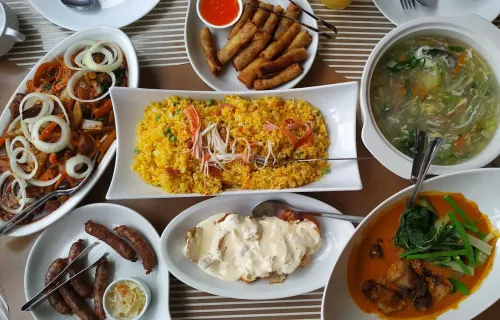
Filipino Food: 12 Essential Dishes (With Tagalog Names)
Filipino food, from adobo to halo-halo: learn the Tagalog names, pronunciations, and ingredients behind 12 dishes you'll want to try on your first trip.

Magkano: How to Ask "How Much" in Tagalog
Magkano means how much in Tagalog. Learn to ask a price, tell it apart from ilan and gaano, sound polite with po, and haggle at the palengke.