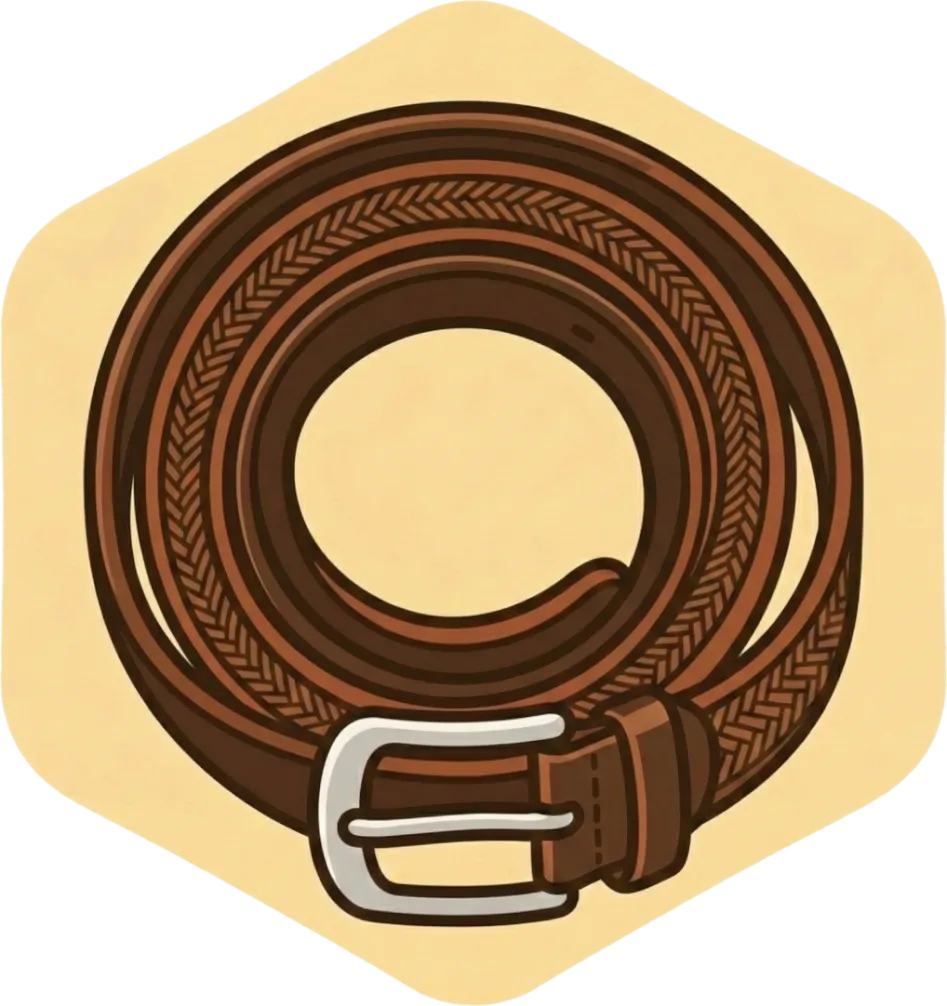
From root: sinturon
Conjugations
Past (Completed)
sininturunan
si-nin-tu-ru-NAN
put a belt on
Present (Incomplete)
sinisinturunan
si-ni-sin-tu-ru-NAN
putting a belt on
Future (Contemplated)
sisinturunan
si-sin-tu-ru-NAN
will put a belt on
Usage Note
Sinturunan is used when putting a belt on another person, such as a child, or when fastening a strap onto an object. It specifically focuses on the act of providing or securing a belt for a recipient rather than oneself.
Examples
" Sinturunan mo ang bata. "
Natural Translation
Put a belt on the child.
Literal Translation
Put-a-belt-on you the child.
" Kailangan mong sinturunan ang pantalon mo. "
Natural Translation
You need to put a belt on your pants.
Literal Translation
Need you put-a-belt-on the pants your.
" Bago kami umalis, sinturunan ko muna ang aking anak dahil maluwag ang suot niyang pantalon. "
Natural Translation
Before we left, I first put a belt on my child because the pants she was wearing were loose.
Literal Translation
Before we leave, put-a-belt-on I first the my child because loose the worn her pants.
Take Tagalog with you
The full course, a 12,500-word dictionary, and flashcards that make every word stick — free to start on iOS and Android.




Tagalog builds thousands of words from a few hundred roots.
How Tagalog words workWord family
sinturon has 5 related forms built from the same root.
Related Words
Explore Tagalog by topic
Free guides on grammar, vocabulary, and culture to take you past single-word lookups.

Mano Po and Filipino Etiquette: A Visitor's Guide
Mano po presses an elder's hand to your forehead as a blessing. Learn who to mano, how to lip-point, and the etiquette that wins over a Filipino family.
Tagalog Numbers 1-100: Counting, Time & Money Explained
Learn Tagalog numbers 1-100 and beyond. Master both native and Spanish-derived counting systems, plus telling time, reading prices, and ordinals.

Tagalog Verb Conjugation: Aspects Made Simple
Tagalog verb conjugation uses aspects, not tenses. Learn the three aspects with -um- and mag- verbs, one reduplication rule, and clear example tables.

Philippines Geography for Learners: Islands & Language
Philippines geography for Tagalog learners: 7,641 islands, three island groups, and the Southern Luzon heartland where the Tagalog language was born.