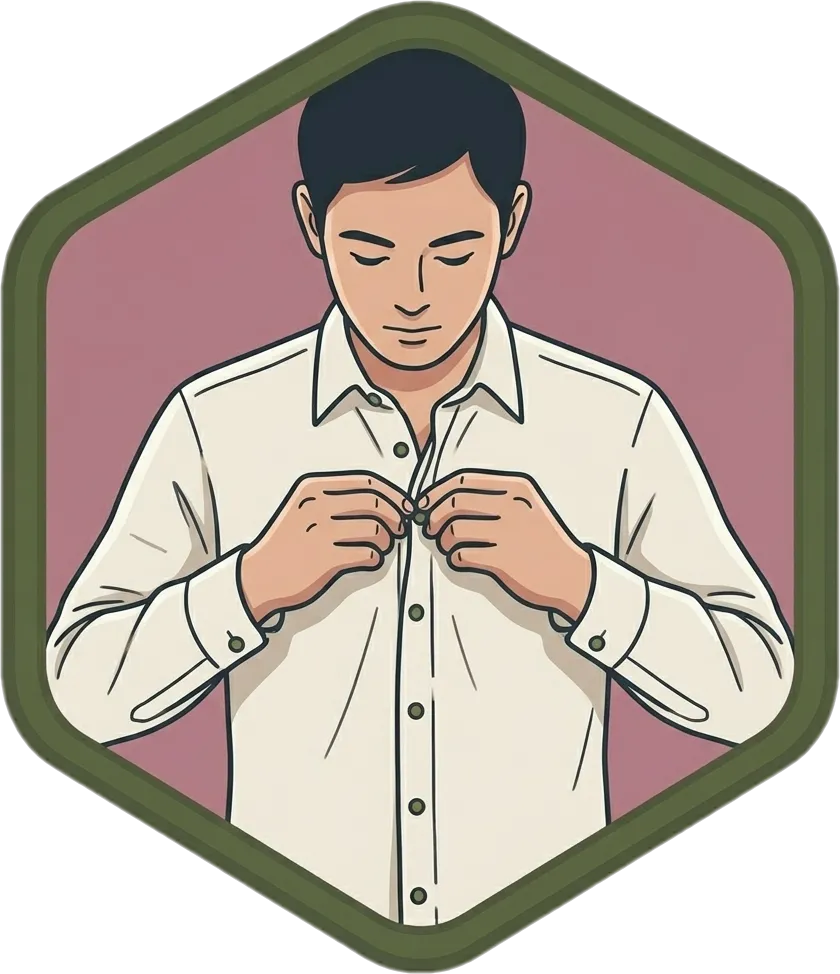
From root: suot
Conjugations
Past (Completed)
nagsuot
nag-su-OT
wore
Present (Incomplete)
nagsusuot
nag-su-su-OT
wearing
Future (Contemplated)
magsusuot
mag-su-su-OT
will wear
Usage Note
Magsuot is used when putting on or wearing clothes, accessories, or footwear and is the standard actor-focus verb for the act of dressing oneself. It is frequently used in daily conversations when instructing someone what to wear or describing the act of putting something on.
Examples
" Magsuot ka ng sapatos. "
Natural Translation
Wear shoes.
Literal Translation
Wear you of shoes.
" Gusto kong magsuot ng pulang damit. "
Natural Translation
I want to wear a red dress.
Literal Translation
Want I to-wear of red clothes.
" Mahalagang magsuot ng makapal na damit kapag malamig ang panahon para hindi ka magkasakit. "
Natural Translation
It is important to wear thick clothes when the weather is cold so you don't get sick.
Literal Translation
Important to-wear of thick clothes when cold the weather so-that not you get-sick.
Take Tagalog with you
The full course, a 12,500-word dictionary, and flashcards that make every word stick — free to start on iOS and Android.




Tagalog builds thousands of words from a few hundred roots.
How Tagalog words workWord family
suot has 6 related forms built from the same root.
Related Words
Explore Tagalog by topic
Free guides on grammar, vocabulary, and culture to take you past single-word lookups.

Ang, Ng, Sa: The 3 Tagalog Case Markers Explained
Ang, ng, sa are the three Tagalog case markers every noun takes. Learn what each does, the personal forms si/ni/kay, plurals with mga, and clear examples.

Tagalog Affixes Explained: A Beginner's Guide to Word Building
Tagalog affixes turn one root word into dozens of meanings. Learn prefixes, infixes, suffixes, and circumfixes with clear examples for beginners.

How to Say Sorry in Tagalog: Patawad vs Pasensya
How to say sorry in Tagalog: patawad, pasensya na, and paumanhin compared on a simple severity-and-formality ladder so you pick the right word every time.

Tagalog Greetings: How to Say Hello, Goodbye & Po/Opo
Master Tagalog greetings with pronunciation: kumusta, magandang umaga, po and opo polite forms, time-of-day phrases, and the mano po tradition.