From root: tabang
Conjugations
Past (Completed)
tinabang
ti-NA-bang
found tasteless
Present (Incomplete)
tinatabang
ti-na-TA-bang
finding tasteless
Future (Contemplated)
tatabangin
ta-ta-ba-NGIN
will find tasteless
Usage Note
Tabangin is used when a person perceives a food or drink as bland or lacking in salt and seasoning, reflecting a subjective judgment of taste. It is commonly used in casual dining contexts to indicate that a dish does not meet one's personal preference for flavor intensity.
Examples
" Tinabang niya ang sopas. "
Natural Translation
He found the soup bland.
Literal Translation
Found-bland he the soup.
" Nagsimulang tabangin ang sabaw. "
Natural Translation
The soup started to taste bland.
Literal Translation
Started-to taste-bland the soup.
" Tinabang ng mga bisita ang inihandang adobo kaya nagdagdag ang lola ng toyo sa kaldero. "
Natural Translation
The guests found the prepared adobo bland, so grandmother added soy sauce to the pot.
Literal Translation
Found-bland by-the guests the prepared adobo so added the grandmother of soy-sauce in pot.
Take Tagalog with you
The full course, a 12,500-word dictionary, and flashcards that make every word stick — free to start on iOS and Android.




Tagalog builds thousands of words from a few hundred roots.
How Tagalog words workWord family
tabang has 4 related forms built from the same root.
Related Words
Explore Tagalog by topic
Free guides on grammar, vocabulary, and culture to take you past single-word lookups.
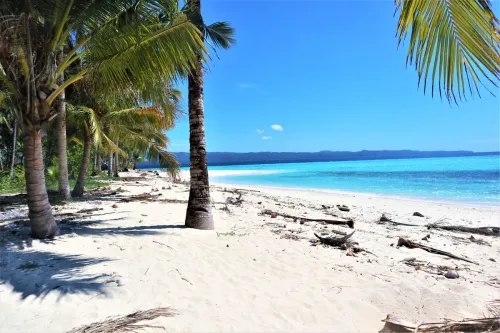
Seasons in the Philippines: A Tagalog Guide
The Philippines has two seasons, not four. Learn tag-araw, tag-ulan, and taglamig, the generative tag- prefix, and the weather vocabulary to match.

Philippine Christmas Traditions: World's Longest Holiday
Philippine Christmas traditions run four months — from Ber-month carols to Simbang Gabi dawn masses, Noche Buena feasts, and parol lanterns lighting every street.
Po and Opo in Tagalog: Where to Put Them Right
Po and opo confuse learners — but placement follows one rule. Where po goes in a sentence, why it's opo not 'oo po', and the pronoun shift to learn.
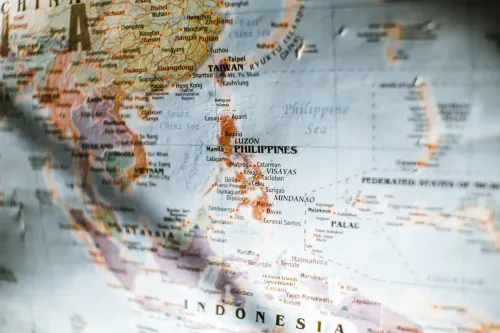
Philippines Geography for Learners: Islands & Language
Philippines geography for Tagalog learners: 7,641 islands, three island groups, and the Southern Luzon heartland where the Tagalog language was born.