tanan
tanán with stress marks
all; to elope
Also means
Tanan as an adjective or pronoun means 'all' or 'everyone', an archaic usage still found in literature and formal speech.
Usage Note
Tanan most commonly means to elope — to run away together without family approval — reflecting a historically common response to family-opposed relationships. The archaic sense of 'all' survives in literature and prayers, giving the word a dual life across registers.
Examples
" Nagtanan ang magkasintahan. "
Natural Translation
The couple eloped.
Literal Translation
Eloped the couple.
" Ang tanan ay inaanyayahan sa pista. "
Natural Translation
All are invited to the fiesta.
Literal Translation
The all are invited to fiesta.
" Dahil ayaw ng kanyang mga magulang sa kanilang relasyon, napilitan silang magtanan at magpakasal nang lihim sa malayong probinsya. "
Natural Translation
Because her parents disapproved of their relationship, they were forced to elope and marry secretly in a far-off province.
Literal Translation
Because not-want the her parents of their relationship, forced they to-elope and to-marry secretly in far province.
Take Tagalog with you
The full course, a 12,500-word dictionary, and flashcards that make every word stick — free to start on iOS and Android.




Tagalog builds thousands of words from a few hundred roots.
How Tagalog words workActor Focus Verbs
Related Words
Explore Tagalog by topic
Free guides on grammar, vocabulary, and culture to take you past single-word lookups.

Tagalog Verb Focus System Explained (It's Not Active vs. Passive)
The Tagalog verb focus system isn't active vs. passive. Learn actor focus, object focus, and more with clear examples that finally make it click.
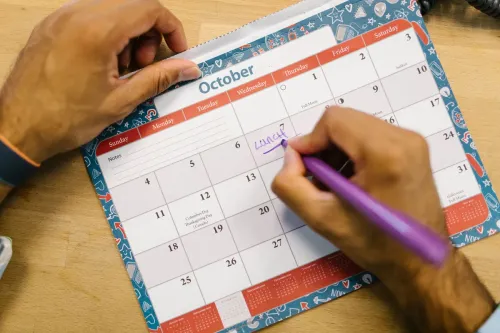
Days of the Week and Months in Tagalog
The days of the week and months in Tagalog are Spanish loanwords. Learn all 7 days and 12 months with pronunciation, plus how to say dates and 'every Monday.'

Na vs -ng in Tagalog: The Linker Rule Made Simple
When do you use na vs -ng in Tagalog? One simple rule, with clear examples, memory tips, and common mistakes explained for English-speaking beginners.

Magkano: How to Ask "How Much" in Tagalog
Magkano means how much in Tagalog. Learn to ask a price, tell it apart from ilan and gaano, sound polite with po, and haggle at the palengke.