taob
taób with stress marks
overturn; capsize; face-down
Usage Note
Taob describes something flipped upside-down or overturned — a capsized boat, an upside-down glass, or a person lying face-down. It is used both as a verb (nagtaob ang bangka — the boat capsized) and as an adjective describing position. In cooking, it also refers to inverting a dish or pot.
Examples
" Taob ang baso sa mesa. "
Natural Translation
The glass on the table is face-down.
Literal Translation
Face-down the glass on table.
" Taob ang bangka dahil sa malakas na alon. "
Natural Translation
The boat is overturned because of the strong waves.
Literal Translation
Overturned the boat because of strong waves.
" Nataob ang lahat ng laman ng bag nang hindi ko sinasadyang matumba ito sa daan. "
Natural Translation
Everything inside the bag spilled out when I accidentally knocked it over on the road.
Literal Translation
Overturned the all of contents of bag when not I intentionally toppled it on road.
Take Tagalog with you
The full course, a 12,500-word dictionary, and flashcards that make every word stick — free to start on iOS and Android.




Tagalog builds thousands of words from a few hundred roots.
How Tagalog words workActor Focus Verbs
Object Focus Verbs
Related Words
Explore Tagalog by topic
Free guides on grammar, vocabulary, and culture to take you past single-word lookups.

Na vs -ng in Tagalog: The Linker Rule Made Simple
When do you use na vs -ng in Tagalog? One simple rule, with clear examples, memory tips, and common mistakes explained for English-speaking beginners.
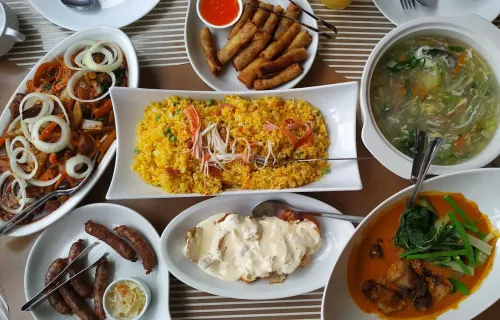
Filipino Food: 12 Essential Dishes (With Tagalog Names)
Filipino food, from adobo to halo-halo: learn the Tagalog names, pronunciations, and ingredients behind 12 dishes you'll want to try on your first trip.

Languages of the Philippines: Tagalog, Cebuano, and More
Languages of the Philippines: one national language (Filipino) plus 180+ regional languages. Here's who speaks what, where, and why it matters to you.

Tagalog vs Filipino: What's the Difference & Which to Learn
Tagalog and Filipino aren't the same language — but they overlap almost completely. Here's the real difference and which one you should actually learn.