From root: tapang
Conjugations
Past (Completed)
nagtapang
nag-ta-PANG
mustered courage
Present (Incomplete)
nagtatapang
nag-ta-ta-PANG
mustering courage
Future (Contemplated)
magtatapang
mag-ta-ta-PANG
will muster courage
Usage Note
Magtapang is used when someone is consciously trying to act brave or show courage, especially when they might actually feel intimidated. It implies a deliberate effort to project a strong or bold demeanor.
Examples
" Magtapang ka para sa anak mo. "
Natural Translation
Be brave for your child.
Literal Translation
Muster-courage you for to child your.
" Kailangan mong magtapang para sa kanila. "
Natural Translation
You need to muster courage for them.
Literal Translation
Need you muster-courage for at them.
" Kahit takot na takot siya, nagtapang siya upang ipagtanggol ang kanyang pamilya sa panganib. "
Natural Translation
Even though he was terrified, he summoned his courage to defend his family from danger.
Literal Translation
Even afraid very he, mustered-courage he to defend the his family from danger.
Take Tagalog with you
The full course, a 12,500-word dictionary, and flashcards that make every word stick — free to start on iOS and Android.




Tagalog builds thousands of words from a few hundred roots.
How Tagalog words workWord family
tapang has 5 related forms built from the same root.
Related Words
Explore Tagalog by topic
Free guides on grammar, vocabulary, and culture to take you past single-word lookups.
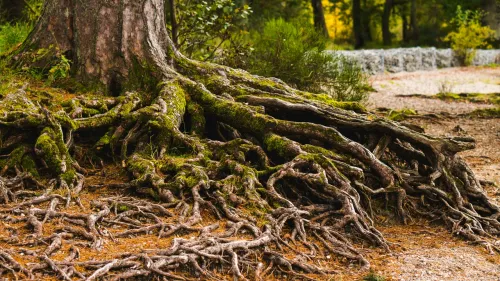
Tagalog Root Words: Learn a Few Hundred, Understand Thousands
Tagalog root words unlock vocabulary fast: learn a few hundred and recognize thousands. Real word families, examples, and a practical study strategy.
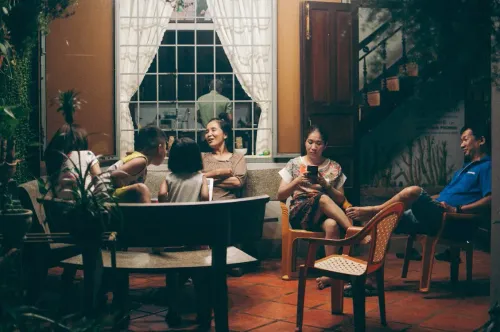
Filipino Family Words and Honorifics: Ate, Kuya & Tita
Filipino family words like ate, kuya, tita, tito, lolo, and lola go far beyond family — learn how Filipinos use them with strangers, plus mano po etiquette.
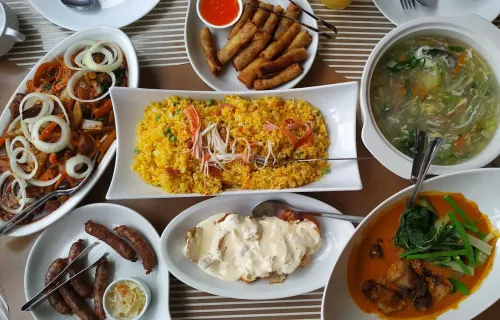
Filipino Food: 12 Essential Dishes (With Tagalog Names)
Filipino food, from adobo to halo-halo: learn the Tagalog names, pronunciations, and ingredients behind 12 dishes you'll want to try on your first trip.
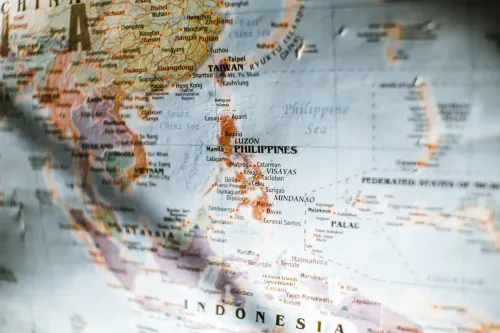
Philippines Geography for Learners: Islands & Language
Philippines geography for Tagalog learners: 7,641 islands, three island groups, and the Southern Luzon heartland where the Tagalog language was born.