From root: tapang
Conjugations
Past (Completed)
tumapang
tu-ma-PANG
became brave
Present (Incomplete)
tumatapang
tu-ma-ta-PANG
becoming brave
Future (Contemplated)
tatapang
ta-ta-PANG
will become brave
Usage Note
Tumapang is used when describing a person's character transformation or an increase in courage, often as a result of life experiences or specific challenges. It focuses on the process of becoming brave rather than just the state of being brave.
Examples
" Unti-unting tumatapang ang bata. "
Natural Translation
The child is slowly becoming brave.
Literal Translation
Slowly becoming-brave the child.
" Nagsimulang tumapang ang bata sa dilim. "
Natural Translation
The child started to become brave in the dark.
Literal Translation
Started become-brave the child at dark.
" Habang lumilipas ang panahon, tumatapang siya at hindi na natatakot na harapin ang mga pagsubok. "
Natural Translation
As time goes by, he is growing braver and is no longer afraid to face challenges.
Literal Translation
While passing the time, becoming-brave he and not anymore afraid to face the challenges.
Take Tagalog with you
The full course, a 12,500-word dictionary, and flashcards that make every word stick — free to start on iOS and Android.




Tagalog builds thousands of words from a few hundred roots.
How Tagalog words workWord family
tapang has 5 related forms built from the same root.
Related Words
Explore Tagalog by topic
Free guides on grammar, vocabulary, and culture to take you past single-word lookups.

Languages of the Philippines: Tagalog, Cebuano, and More
Languages of the Philippines: one national language (Filipino) plus 180+ regional languages. Here's who speaks what, where, and why it matters to you.

Mano Po and Filipino Etiquette: A Visitor's Guide
Mano po presses an elder's hand to your forehead as a blessing. Learn who to mano, how to lip-point, and the etiquette that wins over a Filipino family.
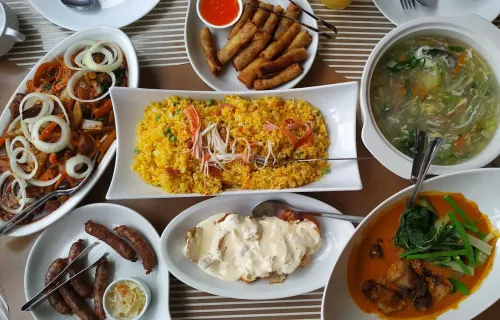
Filipino Food: 12 Essential Dishes (With Tagalog Names)
Filipino food, from adobo to halo-halo: learn the Tagalog names, pronunciations, and ingredients behind 12 dishes you'll want to try on your first trip.

How to Say Sorry in Tagalog: Patawad vs Pasensya
How to say sorry in Tagalog: patawad, pasensya na, and paumanhin compared on a simple severity-and-formality ladder so you pick the right word every time.