ituro
itúro with stress marks
to point out or teach [it]
![Illustration of "ituro" (to point out or teach [it])](https://assets.tagalognow.com/images/flashcards/people-and-society/ituro.webp)
From root: turo
Conjugations
Past (Completed)
itinuro
i-ti-NU-ro
pointed at
Present (Incomplete)
itinuturo
i-ti-nu-TU-ro
is being pointed at
Future (Contemplated)
ituturo
i-tu-TU-ro
will be pointed at
Usage Note
Ituro is the object-focus form of turo, covering both pointing at something physical and teaching a specific subject or lesson. The same form serves both meanings, reflecting the cultural and linguistic link between showing and instructing in Filipino.
Examples
" Ituro mo ang bahay nila. "
Natural Translation
Point at their house.
Literal Translation
Point-at you the house their.
" Subukan mong ituro kung aling kotse ang nagustuhan mo sa tindahan. "
Natural Translation
Try to point at which car you liked in the store.
Literal Translation
Try you to-point-at if which car the liked you at store.
" Huwag mong ituro ang ibang tao dahil bastos iyon sa ating kultura. "
Natural Translation
Don't point at other people because that's rude in our culture.
Literal Translation
Don't you point-at the other person because rude that in our culture.
Take Tagalog with you
The full course, a 12,500-word dictionary, and flashcards that make every word stick — free to start on iOS and Android.




Tagalog builds thousands of words from a few hundred roots.
How Tagalog words workWord family
turo has 1 related form built from the same root.
Related Words
Explore Tagalog by topic
Free guides on grammar, vocabulary, and culture to take you past single-word lookups.

Spaced Repetition for Tagalog: How Flashcards Make Words Stick
Cramming Tagalog vocabulary fails. See how spaced repetition — the science behind smart flashcards — makes words stick for the long term.
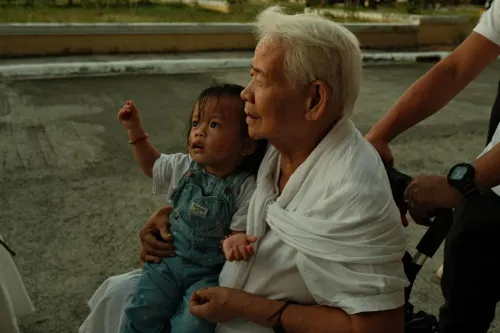
Po and Opo in Tagalog: Where to Put Them Right
Po and opo confuse learners — but placement follows one rule. Where po goes in a sentence, why it's opo not 'oo po', and the pronoun shift to learn.
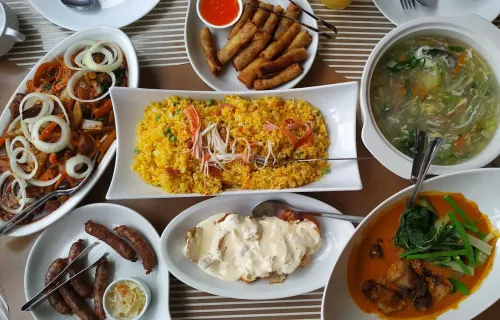
Filipino Food: 12 Essential Dishes (With Tagalog Names)
Filipino food, from adobo to halo-halo: learn the Tagalog names, pronunciations, and ingredients behind 12 dishes you'll want to try on your first trip.
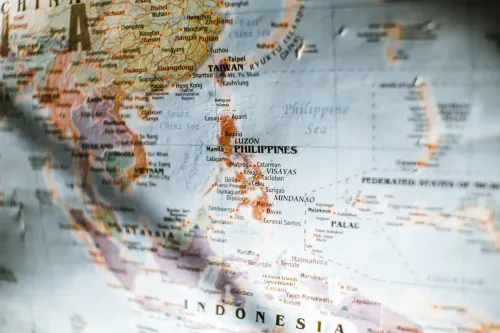
Philippines Geography for Learners: Islands & Language
Philippines geography for Tagalog learners: 7,641 islands, three island groups, and the Southern Luzon heartland where the Tagalog language was born.