umpisahan
umpisahán with stress marks
to start [it]; to begin [it]
From root: umpisa
Conjugations
Past (Completed)
inumpisahan
i-num-pi-sa-HAN
started
Present (Incomplete)
inuumpisahan
i-nu-um-pi-sa-HAN
is being started
Future (Contemplated)
uumpisahan
u-um-pi-sa-HAN
will be started
Usage Note
Umpisahan is the object-focus form of umpisa, placing the activity or project being started at the center of the clause. It is the appropriate choice when the task being initiated — not the initiator — is the grammatical focus, and is equally common in both casual and professional contexts.
Examples
" Umpisahan na natin ang gawain. "
Natural Translation
Let's start the task now.
Literal Translation
Start now we the task.
" Kailangan nating umpisahan ang paglilinis ng bahay nang maaga bukas. "
Natural Translation
We need to start cleaning the house early tomorrow.
Literal Translation
Need we to-start the cleaning of house early tomorrow.
" Bago natin umpisahan ang bagong proyekto, kailangan munang aprubahan ng pinuno ang badyet na ipinasa namin noong nakaraang linggo. "
Natural Translation
Before we start the new project, the boss first needs to approve the budget we submitted last week.
Literal Translation
Before we to-start the new project, need first to-approve of boss the budget that submitted we last week.
Take Tagalog with you
The full course, a 12,500-word dictionary, and flashcards that make every word stick — free to start on iOS and Android.




Tagalog builds thousands of words from a few hundred roots.
How Tagalog words workWord family
umpisa has 1 related form built from the same root.
Related Words
Explore Tagalog by topic
Free guides on grammar, vocabulary, and culture to take you past single-word lookups.
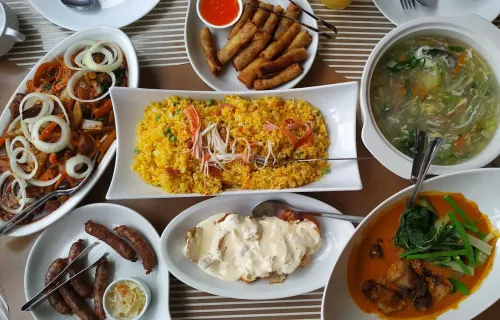
Filipino Food: 12 Essential Dishes (With Tagalog Names)
Filipino food, from adobo to halo-halo: learn the Tagalog names, pronunciations, and ingredients behind 12 dishes you'll want to try on your first trip.

Magkano: How to Ask "How Much" in Tagalog
Magkano means how much in Tagalog. Learn to ask a price, tell it apart from ilan and gaano, sound polite with po, and haggle at the palengke.

Tagalog Root Words: Learn a Few Hundred, Understand Thousands
Tagalog root words unlock vocabulary fast: learn a few hundred and recognize thousands. Real word families, examples, and a practical study strategy.

Tagalog Verb Conjugation: Aspects Made Simple
Tagalog verb conjugation uses aspects, not tenses. Learn the three aspects with -um- and mag- verbs, one reduplication rule, and clear example tables.