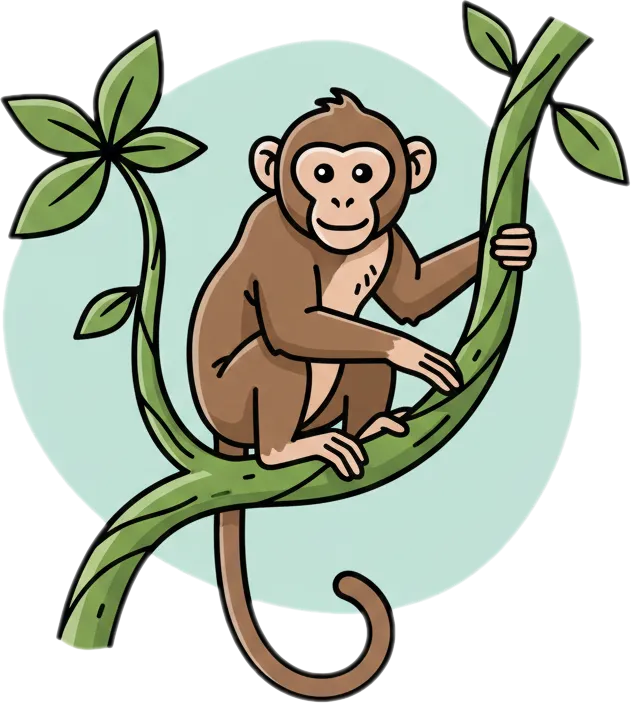
From root: unggoy
Usage Note
Kaunggoyan is a colloquial, mildly humorous noun derived from unggoy meaning monkey, used to describe foolish, mischievous, or undignified behavior. It is informal and typically used by adults scolding children or peers, carrying a tone of exasperated amusement rather than serious rebuke.
Examples
" Tama na ang kaunggoyan mo. "
Natural Translation
Enough with your monkey business.
Literal Translation
Enough already the monkey-business yours.
" Itigil mo na ang iyong kaunggoyan sa klase. "
Natural Translation
Stop your monkey business in class.
Literal Translation
Stop you already your monkey-business in class.
" Kung hindi mo ititigil ang kaunggoyan mo sa loob ng silid-aralan, baka mapaalis ka pa ng guro bago matapos ang araw. "
Natural Translation
If you don't stop your monkey business inside the classroom, the teacher might even send you out before the day ends.
Literal Translation
If not you will-stop the monkey-business yours in inside of classroom, maybe will-be-sent-out you even by teacher before will-end the day.
Take Tagalog with you
The full course, a 12,500-word dictionary, and flashcards that make every word stick — free to start on iOS and Android.




Tagalog builds thousands of words from a few hundred roots.
How Tagalog words workWord family
unggoy has 3 related forms built from the same root.
Related Words
Explore Tagalog by topic
Free guides on grammar, vocabulary, and culture to take you past single-word lookups.

Seasons in the Philippines: A Tagalog Guide
The Philippines has two seasons, not four. Learn tag-araw, tag-ulan, and taglamig, the generative tag- prefix, and the weather vocabulary to match.
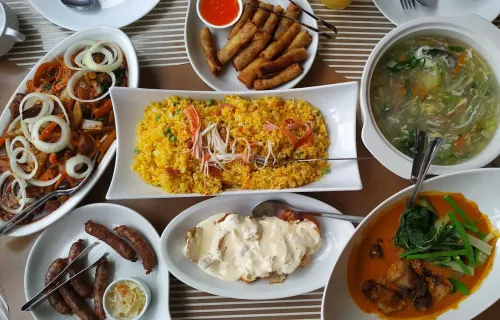
Filipino Food: 12 Essential Dishes (With Tagalog Names)
Filipino food, from adobo to halo-halo: learn the Tagalog names, pronunciations, and ingredients behind 12 dishes you'll want to try on your first trip.

Tagalog Numbers 1-100: Counting, Time & Money Explained
Learn Tagalog numbers 1-100 and beyond. Master both native and Spanish-derived counting systems, plus telling time, reading prices, and ordinals.

Philippines Geography for Learners: Islands & Language
Philippines geography for Tagalog learners: 7,641 islands, three island groups, and the Southern Luzon heartland where the Tagalog language was born.