From root: usap
Conjugations
Past (Completed)
pinag-usapan
pi-nag-u-SA-pan
talked about something
Present (Incomplete)
pinag-uusapan
pi-nag-u-u-SA-pan
talking about something
Future (Contemplated)
pag-uusapan
pag-u-u-SA-pan
will talk about something
Usage Note
Pag-usapan is used when focusing on a specific topic, problem, or plan that needs to be discussed among a group or between individuals. It often implies a level of seriousness or a need for a resolution, such as in a meeting or a private negotiation.
Examples
" Pag-usapan natin mamaya. "
Natural Translation
Let's talk about it later.
Literal Translation
Talk-about we later.
" Gusto kong pag-usapan ang problema natin. "
Natural Translation
I want to talk about our problem.
Literal Translation
Want I talk-about the problem our.
" Bago tayo magdesisyon, kailangan nating pag-usapan ang lahat ng posibleng epekto sa pamilya. "
Natural Translation
Before we decide, we need to talk about all the possible effects on the family.
Literal Translation
Before we decide, need we talk-about the all of possible effect on family.
Take Tagalog with you
The full course, a 12,500-word dictionary, and flashcards that make every word stick — free to start on iOS and Android.




Tagalog builds thousands of words from a few hundred roots.
How Tagalog words workWord family
usap has 11 related forms built from the same root.
Related Words
Explore Tagalog by topic
Free guides on grammar, vocabulary, and culture to take you past single-word lookups.
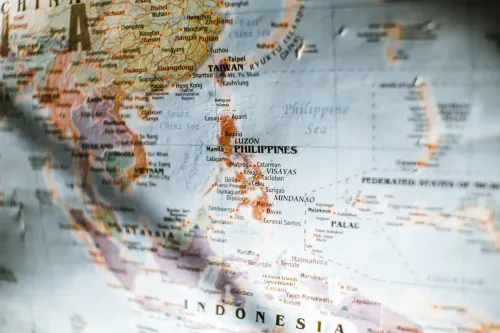
Philippines Geography for Learners: Islands & Language
Philippines geography for Tagalog learners: 7,641 islands, three island groups, and the Southern Luzon heartland where the Tagalog language was born.

Tagalog Affixes Explained: A Beginner's Guide to Word Building
Tagalog affixes turn one root word into dozens of meanings. Learn prefixes, infixes, suffixes, and circumfixes with clear examples for beginners.

Tagalog Root Words: Learn a Few Hundred, Understand Thousands
Tagalog root words unlock vocabulary fast: learn a few hundred and recognize thousands. Real word families, examples, and a practical study strategy.

Tagalog vs Filipino: What's the Difference & Which to Learn
Tagalog and Filipino aren't the same language — but they overlap almost completely. Here's the real difference and which one you should actually learn.