mag-usisa
mag-usísà with stress marks
to inquire
From root: usisa
Conjugations
Past (Completed)
nag-usisa
nag-u-SI-sa
inquired
Present (Incomplete)
nag-uusisa
nag-u-u-SI-sa
is inquiring
Future (Contemplated)
mag-uusisa
mag-u-u-SI-sa
will inquire
Usage Note
Mag-usisa is the actor-focus form of usisa, foregrounding the curious or probing inquirer. It carries a mild negative tinge in casual usage — implying nosiness or prying — though in formal investigative contexts it is neutral; it is distinct from magtanong in that it implies persistent, detail-seeking inquiry rather than a single question.
Examples
" Huwag kang mag-usisa sa akin. "
Natural Translation
Don't pry into my business.
Literal Translation
Don't you to-inquire to me.
" Karapatan ng mamimili ang mag-usisa tungkol sa kalidad ng produkto. "
Natural Translation
It is the buyer's right to inquire about the product's quality.
Literal Translation
Right of buyer the to-inquire about at quality of product.
" Bago siya pumirma sa kontrata, nag-usisa muna siya tungkol sa lahat ng nakatagong bayarin. "
Natural Translation
Before signing the contract, he first inquired thoroughly about all the hidden fees.
Literal Translation
Before he signed at contract, inquired first he about all-the hidden charges.
Take Tagalog with you
The full course, a 12,500-word dictionary, and flashcards that make every word stick — free to start on iOS and Android.




Tagalog builds thousands of words from a few hundred roots.
How Tagalog words workWord family
usisa has 1 related form built from the same root.
Explore Tagalog by topic
Free guides on grammar, vocabulary, and culture to take you past single-word lookups.

Tagalog Numbers 1-100: Counting, Time & Money Explained
Learn Tagalog numbers 1-100 and beyond. Master both native and Spanish-derived counting systems, plus telling time, reading prices, and ordinals.

Tagalog Greetings: How to Say Hello, Goodbye & Po/Opo
Master Tagalog greetings with pronunciation: kumusta, magandang umaga, po and opo polite forms, time-of-day phrases, and the mano po tradition.
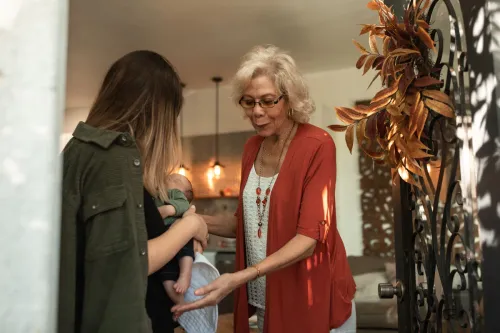
Mano Po and Filipino Etiquette: A Visitor's Guide
Mano po presses an elder's hand to your forehead as a blessing. Learn who to mano, how to lip-point, and the etiquette that wins over a Filipino family.
Po and Opo in Tagalog: Where to Put Them Right
Po and opo confuse learners — but placement follows one rule. Where po goes in a sentence, why it's opo not 'oo po', and the pronoun shift to learn.